Every food tech vendor in 2026 wants to sell you an AI food waste system. Most of them were built for hotel chains and corporate cafeterias — and they cost like it.
Here’s what’s actually at stake: food waste typically eats 4–10% of a restaurant’s purchased ingredients (industry figures via ReFED). For a kitchen spending $15,000/month on food, that’s $600–$1,500 walking out the back door every month. AI genuinely can close that gap — but only if the tool matches your scale. The wrong tool wastes more money than the food it was supposed to save.
The short answer: AI food waste reduction works, and it’s the rare food-tech category that earns its hype. But Winnow, Leanpath, and Orbisk were built for multi-unit chains and institutional kitchens — not the 60-cover bistro or the two-location taco spot. Independent operators with 1–5 locations should start with demand forecasting inside whatever POS they’re already paying for, layer in a mid-tier inventory platform if the numbers justify it, and treat the big-brand AI systems as a future upgrade — not a first buy.
Here’s what the enterprise vendors won’t put in their sales decks, and what mainstream editorial coverage keeps getting wrong.
The 2026 AI Food Waste Landscape (And the Scale Mismatch Nobody Talks About)
AI food waste tools aren’t new. Winnow launched around 2013 and spent years selling exclusively to hotel groups, contract caterers, cruise lines, and large chains. That was the right customer for a reason — these are operations running 1,000+ covers a day with dedicated tech teams and F&B managers whose entire job is cost control.
What changed in 2025–2026 is the sales motion, not the tools. Following waves of NRA Show coverage and Restaurant Dive reporting on AI adoption, these same enterprise vendors began pitching down-market to independent operators. The “30–70% waste reduction” claims that proved out in IKEA cafeterias and Hilton kitchens suddenly appeared in cold outreach emails to single-location sandwich shops.
The tools didn’t change. The target audience did.
One industry analysis put it bluntly: “Historically, operational intelligence tools were designed for large restaurant groups with corporate IT departments, leaving independent operators choosing between expensive enterprise platforms they don’t need, free spreadsheet systems that break under pressure, and gut instinct.” (popularaitools.ai, 2026)
That’s exactly where we are. And it’s worth stating clearly: AI food waste reduction is the one food-tech category we actually believe in. Waste is measurable. Waste has a direct dollar value. Reducing it doesn’t require any creative compromise. But endorsing the category isn’t the same as endorsing every tool in it — and the loudest voices right now are selling operators platforms sized for properties that serve breakfast buffets to 400 guests every morning.
The Enterprise Tools: What They Do and Who They’re Actually For
Let’s look at the three platforms you’ll hear most about, and be honest about who they’re actually built for.
Winnow uses computer vision to identify what’s being discarded in the kitchen and generates waste analytics in real time. It’s genuinely impressive technology. Customers include IKEA, Compass Group, and Hilton Tokyo Bay. Pricing is custom — no rate card is published anywhere, and none of the major software review sites (Capterra, SoftwareAdvice, GetApp) list a number either. That alone tells you something about the customer they’re selling to. A Slashdot software comparison notes that “Winnow’s platform requires significant hardware investment and complex installation, which often delays implementation for several months.”
Leanpath takes a weighing-scale approach — kitchen staff log waste by placing discarded food on a connected scale, which categorizes and tracks it. The analytics focus on pre-consumer waste: prep waste, expired stock, overproduction. Pricing is enterprise-tier and structured for institutional kitchens. Their showcase customers are schools, hospitals, and corporate cafeterias.
Orbisk installs a dedicated computer vision camera above the bin to identify discarded food types automatically. No manual logging required — but dedicated hardware installation is required, along with ongoing maintenance. A UK restaurant industry analysis by Jelly noted that “smaller venues may struggle with Orbisk’s dedicated hardware setup and ongoing maintenance.” That’s a diplomatic way of saying: if you’re not running a hotel kitchen, the setup alone may be your first headache.
The honest threshold: all three platforms assume food-cost volumes large enough to generate ROI within 12 months through a dedicated hardware-plus-software contract.
A 60-cover bistro is not the right customer for any of these platforms. A 3-location fast-casual chain doing $4M+ in annual revenue with a dedicated ops manager might be. The mismatch isn’t a flaw in the tools — it’s a flaw in how they’re being marketed.
What Actually Fits a Small Restaurant Budget
Here’s the tier breakdown that vendor content never gives you, because it would torpedo their conversion rates.
Tier 1: Free and Near-Free (Start Here)
Too Good To Go is the easiest win in food waste for any restaurant with end-of-day surplus. You list unsold food as “surprise bags” — customers buy them through the app at $3.99–$5.99, which is 60–80% off retail. You pay nothing upfront. The revenue you recover is pure found money on food that was heading for the bin anyway.
The scale of this platform matters: as of August 2023, Too Good To Go reported 164,000 business partners and 155 million bags of food saved (NPR, October 2023). It’s not AI in the flashy computer-vision sense, but it’s software that directly reduces waste and generates revenue. For most independent restaurants, that’s more valuable than a camera watching what goes in the bin.
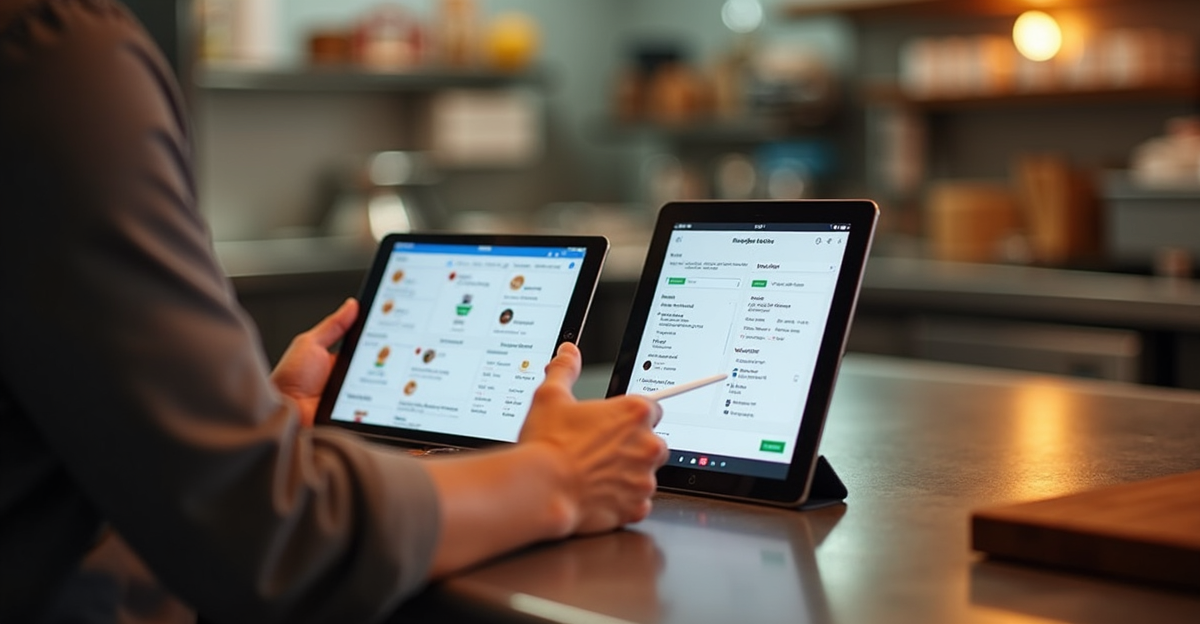
Demand forecasting inside your existing POS is the next free win. Toast, Square, and Lightspeed all have inventory and forecasting modules that most operators have never turned on. Before you subscribe to anything new, check what’s already available in the software you’re paying for.
A manual waste log — a shared spreadsheet or a whiteboard in the walk-in — is not glamorous, but it is the thing that will make any future software investment worth something. More on this in a moment.
Tier 2: Mid-Tier ($100–$300/month)
Once you have disciplined inventory counts and a clear picture of where your waste is coming from, this tier starts to make sense.
MarketMan runs approximately $149/month for a single location plus a $500 one-time setup fee (confirmed via Capterra, GetApp, and Research.com — cross-reference with marketman.com/pricing before committing). It handles AI-assisted ordering, recipe costing, and inventory management, integrates with common POS systems, and requires no dedicated hardware. For a 2+ location independent operator with consistent inventory discipline, this is the platform most worth evaluating.
Supy positions itself as a 6-in-1 back-of-house platform covering procurement, inventory, waste tracking, and menu engineering. Pricing is less standardized across review sites, so treat any number you see online as a starting point for a real conversation with their team.
BlueCart focuses on B2B ordering and inventory, particularly strong for streamlining supplier ordering. If over-ordering from distributors is your main cost leak, this is worth a look.
Tier 3: Enterprise Scale (Revisit When You’ve Outgrown Tier 2)
Winnow, Leanpath, and Orbisk belong here. Not never — just not yet, for most independent operators.
Does AI Inventory Management Replace Your Kitchen Manager?
No. And the vendors know this — they just don’t lead with it in the pitch.
AI inventory and waste tools surface data. Your kitchen manager — or you, if you’re owner-operating — still interprets that data and makes the calls. The AI doesn’t know that Thursday was unusually slow because there was a Beyoncé concert pulling your usual Friday crowd forward by a day. You do.
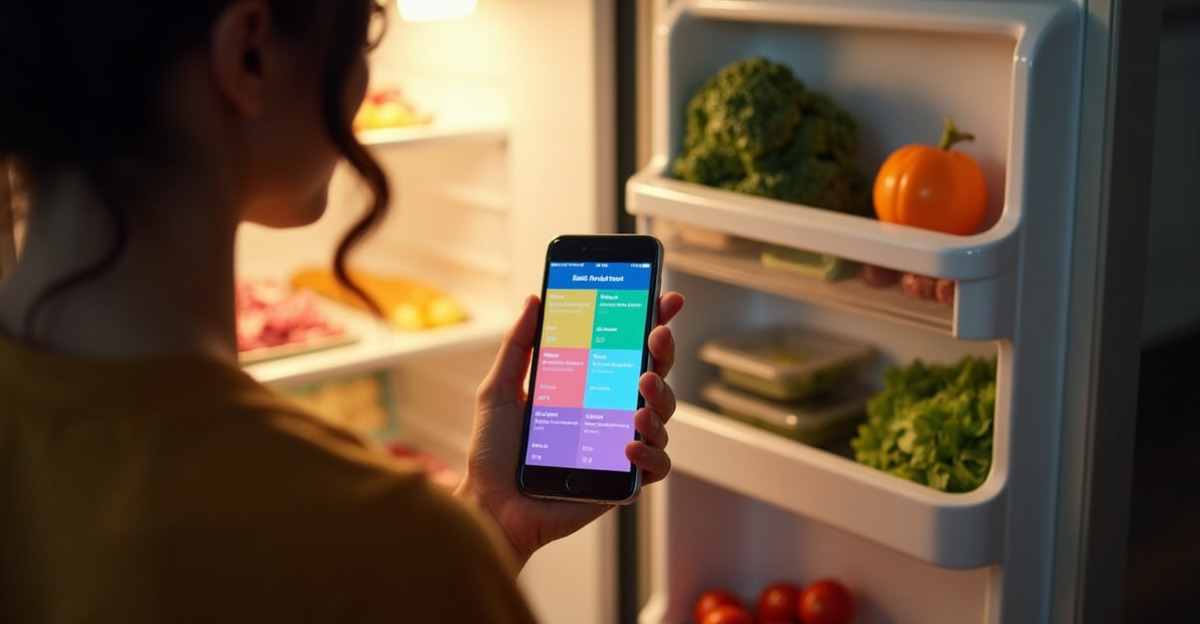
The real win is what AI catches that humans miss: the slow bleeds. Gradual over-ordering of an ingredient that never actually runs out. Prep yields quietly drifting down by 3% across three months. Cover count variance on storm days that a busy manager won’t track manually because they’re too busy running the floor.
That’s where software earns its keep — not making decisions, but flagging patterns that deserve a decision.
Where AI fails completely: if your team doesn’t log consistently, doesn’t count stock accurately, or doesn’t trust the system, the AI has nothing to learn from. You’ll get a very confident-looking dashboard full of noise. The tools work best when one specific person owns the weekly review and actually acts on the findings.
Here’s our core position on this: AI in the kitchen is a sous chef’s tool, not a head chef replacement. The intuition, the technique, the read on what a given Saturday night is going to need — that’s human. The variance analysis and slow-bleed over-ordering patterns? That’s where software earns its keep.
Our Take: Who Should Buy, Who Should Wait, and What to Skip
No hedging. Here’s the direct breakdown.
Buy now (free tier): Any operator with end-of-day surplus → Too Good To Go. Sign up today. Zero downside, immediate revenue recovery from food you’d otherwise throw away.
Buy now (mid-tier): 2+ location operators running $2M+ in annual revenue who already have disciplined inventory counts and want to automate the analysis layer → evaluate MarketMan or Supy on a monthly trial. Also: before adding a new subscription, turn on the demand forecasting features inside your existing POS. Seriously. Check what you’re already paying for.
Wait: Single-location operators under $800K in annual revenue with inconsistent inventory processes. Fix the operational discipline first, then add software. The software will do nothing if the data going in is unreliable. A two-week manual waste log is your starting point — if you can’t identify your top three waste categories with pen and paper, no platform will fix the underlying problem.
Skip (for now): Winnow, Leanpath, and Orbisk — unless you’re operating a catering arm, hotel kitchen, or have a specific high-volume waste problem that mid-tier software demonstrably can’t solve. These tools are not bad. They’re not for you yet.
The real AI food waste win for most small operators in 2026 isn’t a standalone AI waste platform. It’s demand forecasting inside whatever POS you’re already paying for, finally turned on and actually used. That’s not exciting enough to put in a conference keynote, but it’s true.
Frequently Asked Questions
Can small restaurants afford AI food waste tools, or are they only for chains?
Both are true at different price points. Free options — Too Good To Go, POS-native demand forecasting — are accessible to any operator with no upfront commitment. Mid-tier platforms ($149–$300/month) make sense for operators at 2+ locations or $2M+ in revenue who already have inventory discipline. Enterprise tools like Winnow, Leanpath, and Orbisk require hardware installations, custom contracts, and food-cost volumes that most independent restaurants won’t reach.
What is the actual ROI of AI food waste reduction software for an independent restaurant?
Hard to verify independently — most published ROI figures come from vendor marketing citing enterprise deployments. A more honest framing: ROI depends on your current food cost discipline and daily cover volume. If you’re not tracking waste today, even a manual log can generate savings. For mid-tier software platforms, expect 3–6 months before meaningful waste reduction data accumulates. The 7:1 ROI ratios cited in some industry sources reflect chain-scale deployments, not a 40-seat neighborhood restaurant.
Does AI inventory management replace a kitchen manager, or just support them?
Supports, never replaces. AI surfaces patterns — gradual over-ordering, declining prep yields, slow-moving SKUs — that a kitchen manager can act on. The tool has zero value if the team doesn’t log consistently or count stock accurately. The best implementations have one specific person who owns the weekly review and is empowered to act on what they find.
Which AI food waste tools work without expensive hardware or POS integration?
Too Good To Go requires no hardware or POS integration — just an account and end-of-day surplus. MarketMan and Supy are software-only platforms that connect with common POS systems but don’t require dedicated physical hardware. Winnow and Orbisk both require physical hardware installation at the kitchen. These are not software-only solutions and cannot be trialed without a hardware commitment.
Is AI food waste reduction worth it, or is better prep and ordering discipline enough?
Discipline first, software second. If your kitchen doesn’t have consistent waste tracking and accurate inventory counts, no AI platform can compensate for missing data. Start with a two-week manual waste log to identify your top waste categories. Once you have reliable baseline data, AI tools become genuine multipliers — especially for demand forecasting and identifying slow-bleed over-ordering that manual review tends to miss.
The Bottom Line
AI food waste reduction is real, it works, and it’s worth pursuing — but only the version that matches your actual scale, not the version arriving in your inbox from an enterprise vendor.
Start with a two-week manual waste log to identify your top three waste categories. Then sign up for Too Good To Go to monetize surplus you’d otherwise bin — it costs nothing and pays immediately. If you’re at 2+ locations and already running disciplined inventory counts, put MarketMan or Supy on a monthly trial. Revisit Winnow, Leanpath, and Orbisk when you’ve genuinely outgrown the mid-tier tools.
The best AI food waste tool is the one your kitchen will actually use — and for most independent restaurants right now, that’s not a six-figure hardware install.