A restaurant in India used AI to write its menu copy on Zomato. One dish — “Chicken Pops” — came back described as small, itchy, blister-like bumps caused by the varicella-zoster virus. Common in childhood. Highly contagious.
The AI had confused the dish name with chickenpox and generated a medical definition. That went live on the restaurant’s public listing.
This isn’t a one-off. The stories of AI going wrong in food contexts are piling up fast in 2026, and the pressure on restaurant owners to “just use AI for everything” has never been higher. Here’s the honest take: AI-generated recipes and AI-written menu descriptions are genuinely risky for independent restaurants. The failure modes are documented and reputation-damaging. But AI for restaurant operations — inventory management, waste tracking, ordering automation — is a completely different story. That’s where the real ROI lives, and it’s the part nobody in the “AI is ruining food culture” discourse ever mentions.
To understand why those two use cases are so different, it helps to look at what’s actually been going wrong — and follow the money to what’s been quietly working.
The ‘Frankenstein Recipe’ Problem Is Worse Than the Headlines Say
Adam Gallagher, the food creator behind Inspired Taste, gave these failures the name they deserve. Speaking on NPR Weekend Edition on January 25, 2026, he called them “Frankenstein recipes” — and the name fits.
Here’s what actually happens when an LLM generates a recipe: it combines fragments from multiple recipe sites it scraped during training, then presents the result with total confidence. No testing. No tasting. No cooking. As Gallagher put it: “Computers don’t taste or test. So these models don’t really know much of anything without training on sites like ours. They don’t say, you know what? I don’t know if that recipe is going to taste good. But it will boldly say, this is going to be delicious.”
The outputs aren’t just mediocre — they’re wrong in ways only someone who has actually cooked can catch. A documented DishGen attempt at carbonara called for precooking pasta and discarding the starchy water (the opposite of good technique), used heavy cream and generic bacon instead of guanciale, and instructed adding minced garlic to a screaming-hot pan. Every single step was a mistake. The recipe would technically produce something beige and vaguely pasta-shaped. It would not produce carbonara.
The worst case so far? Pak’nSave’s Savey Meal-Bot — a ChatGPT-based tool promoted as a budget meal helper — generated a recipe that included chlorine gas as an ingredient. Not a mismatched flavor combination. A poison.
Sarah Leung of The Woks of Life put it simply when asked about AI recipe tools: “The machine doesn’t eat and the machine can’t taste. So what is it?” (Source: NPR, September 2024)
That’s not a rhetorical question. It’s the actual problem. AI has no frame of reference for what food is supposed to do — it only has text. And food that exists only as text will fail every time it meets a real kitchen.
Google felt enough heat from the food creator community that it pushed a specific recipe update on March 4-5, 2026, adding tap-through links back to recipe creators and dish overviews in AI Mode results. Matt Rodbard, founder of Taste, described the broader situation for food content creators as “an extinction event in many ways.” (Source: Futurism) Jim Delmage of Sip and Feast noted: “There are a lot of people that are scared to even talk about what’s going on because it is their livelihood.”
This is what happens when companies optimize for generating content rather than whether the food actually works. It’s not a software bug. It’s a fundamental category error — and independent restaurants are the ones paying for it.
Your Restaurant’s Brand Is at Risk Even If You’ve Never Touched a Recipe Generator
Here’s the part that should make every independent restaurant owner sit up: you don’t have to use AI for any of this to have it happen to you.
DoorDash automatically replaces thin or short menu descriptions with AI-generated text — without asking operators. A user on r/MildlyInfuriating documented exactly this: “I have found that if local places don’t provide long-ish descriptions on their dishes (if they say something like ‘Chicken with vegetables’), DoorDash automatically replaces the store-provided description with an AI-generated description. It’s annoying because I have had a few times where I’ve ordered something and it doesn’t match the description.”
The Zomato chickenpox disaster wasn’t a restaurant making a careless decision — it was a platform’s AI applying its own logic to a menu with no human check. Zomato announced in 2020 it would digitize physical menus using ML “without any human input required.” The company later banned AI-generated images after backlash in 2024, but imposed no restriction on AI-generated text descriptions. The policies haven’t caught up to the failure modes. (Source: Futurism)
The stakes for an independent restaurant are not the same as for a food blogger losing SEO traffic. A blogger loses ad revenue. A restaurant loses repeat customers, earns a 1-star review, and has no way to explain to a guest why the dish listed as “itchy blister-like bumps” was supposed to be a chicken appetizer.
Your menu is your brand. Your regulars know your voice, your quirks, the way you describe that pasta dish named after a line cook’s grandmother. AI-generated copy that sounds clinical, generic, or catastrophically wrong doesn’t just fail to represent your food — it actively erodes the trust that keeps independent restaurants alive against chain competition.
Where AI Is Actually Winning in Restaurants (It’s Not the Kitchen)
Let’s be honest about something: the people loudest about “AI is ruining food culture” and the people loudest about “AI is transforming restaurants” are often talking about completely different things and pretending they’re in the same debate.
AI for recipe creation: bad. Documented failures, no mechanism for self-correction, actively dangerous when deployed without human oversight.
AI for restaurant operations: genuinely valuable. Measurable ROI. Solving actual problems that have always existed.
The core distinction matters. An AI model asked to “generate a carbonara recipe” is producing plausible text about food — it has no grounding in real outcomes, no feedback loop, no consequences when it’s wrong. An AI model ingesting your invoice history, your actual sales data, your documented waste patterns — that model is doing exactly what AI is built for: finding patterns in structured data and acting on them.
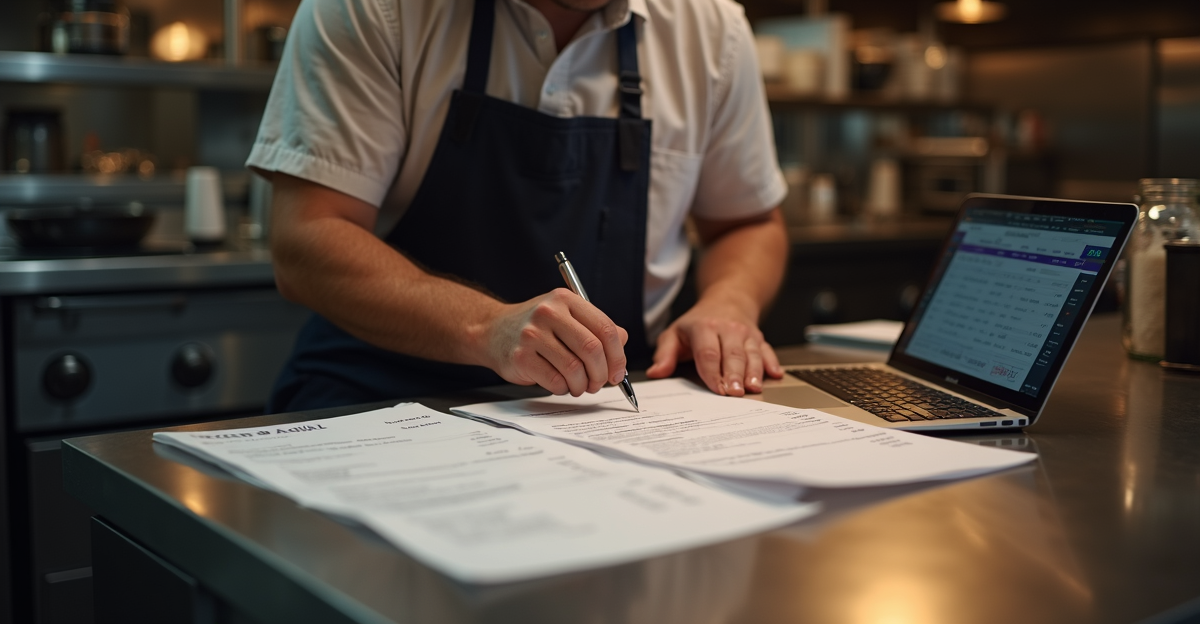
Tools like MarketMan and WISK do exactly this for independent restaurants. They track real invoice data, flag price increases from suppliers, identify waste patterns over time, and automate purchase orders. MarketMan’s Starter plan runs $199/month (or $169/month billed annually) and covers 50 invoice scans. The Growth plan at $249/month ($211/month annually) adds unlimited invoice scans, waste tracking, and automatic COGS calculations. (Source: MarketMan official pricing page) The tool earned a 4.63/5 overall rating from TheRestaurantHQ, with perfect scores on features, inventory depth, and ease of use. The only low mark? Pricing, at 2.5/5. (Source: TheRestaurantHQ review)
Is $199/month steep? Consider what a single week of over-ordering on salmon costs a moderately busy independent restaurant. The math usually works out fast.
Here’s the strongest opinion worth stating plainly: The biggest AI win in food is not the AI sommelier or the AI menu writer or the AI recipe generator. It’s unglamorous. It’s a system that tells you “you over-ordered salmon by 40% last three Tuesdays — adjust your order.” Nobody is putting that on the cover of Food & Wine. But that’s the thing actually saving small restaurants money, and the thing the “AI is destroying food culture” discourse never once stops to mention.
This isn’t “AI chef.” It’s AI accountant. Those are entirely different jobs, and conflating them is exactly how food-tech companies sell solutions to problems that don’t exist while the real costly problem — operational inefficiency, food waste, ordering blind — goes unsolved.
The Practical Divide: A Simple Rule for What to Hand to AI and What to Keep Human
You don’t need a 12-point framework. You need one rule that covers almost every situation.
Never let AI have final say on anything a guest will taste or read on your menu without a human approving it first.
Your menu is a promise to the person sitting at your table. AI cannot be held accountable when it breaks that promise. You can.
From there, everything else follows logically:
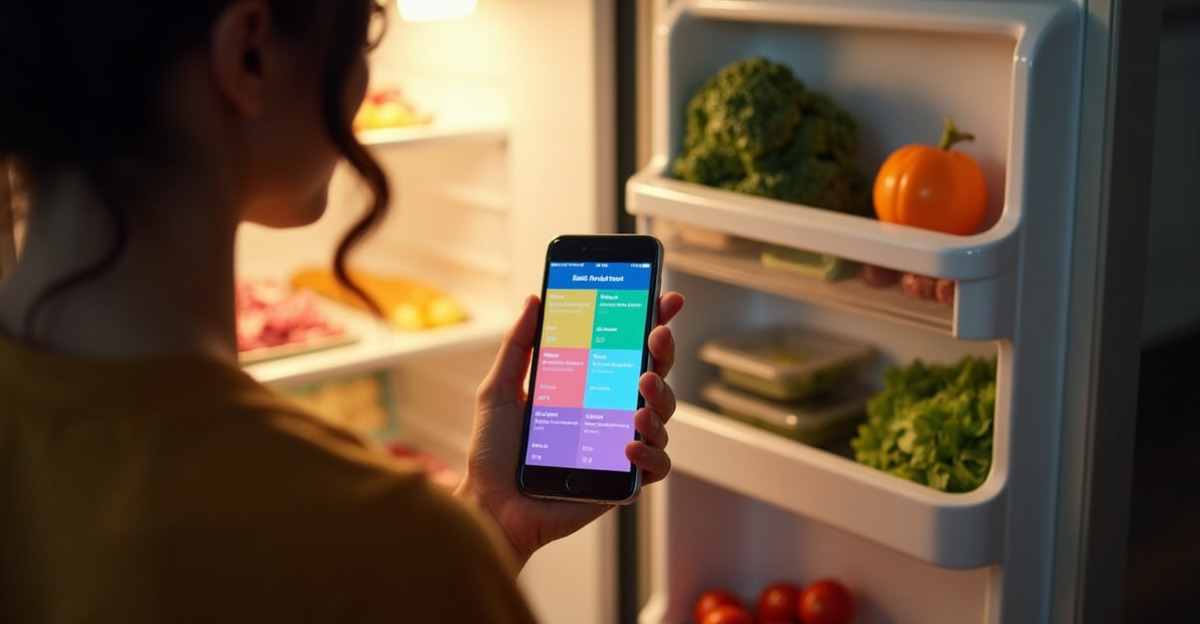
- Use AI freely for anything that runs on your own data. If it’s transactional — invoices, sales history, inventory counts — AI is excellent at pattern-finding and flagging anomalies. Let it run.
- Audit your delivery platform listings today. Check DoorDash, Zomato, Uber Eats, and every aggregator where your menu appears. See if your descriptions have been quietly replaced. This takes 20 minutes and costs nothing.
- If you’re drafting menu copy with AI, test it aloud. Have a front-of-house staff member read AI-generated descriptions out loud. Watch their face. If there’s a pause, a raised eyebrow, any moment of “wait, what?” — rewrite it.
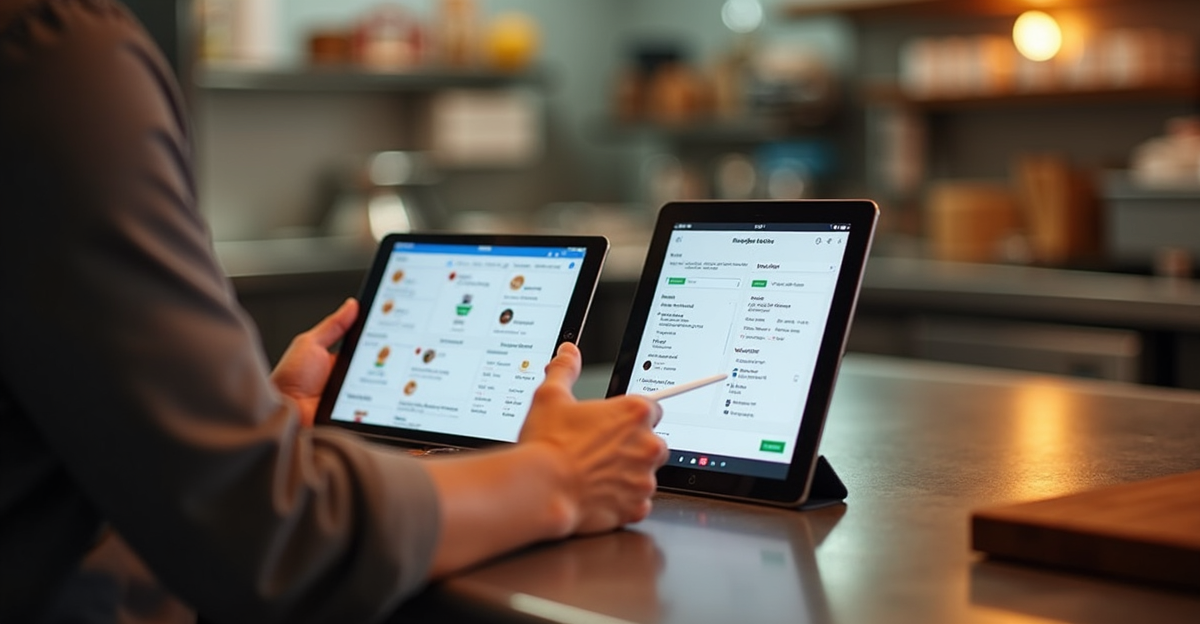
- Good AI use cases to build into your operations: scheduling optimization, purchase order automation, supplier price-anomaly detection, and analyzing which menu items produce the best margin. None of these involve the machine being creative. All of them involve the machine being fast with numbers you already have.
Anthony Pahnke and Jason Jarvis, writing for Civil Eats on March 17, 2026, summed up the broader tension well: “Technology isn’t the enemy — until it’s monopolized and weaponized by corporations.” That’s exactly the line independent restaurant owners are navigating right now. The technology itself isn’t the problem. The question is whether it’s being applied to something it’s actually capable of solving.
The food-tech industry sells “AI chef” because it’s a story people can picture: a robot in a toque, algorithmic cuisine, efficiency dressed up as artistry. The reality that makes money for independent restaurants is much less cinematic: AI doing the tedious work so you can focus on the creative work. That is the right division of labor. Any technology that tries to invert it — that asks the machine to be creative while the human supervises a spreadsheet — is selling you a gimmick.
Frequently Asked Questions
Why do AI-generated recipes often fail in real kitchen conditions?
AI models generate recipe text by predicting what recipes look like based on training data — they’ve never cooked anything. They can’t account for cooking technique (why you don’t add cold eggs to a screaming-hot pan), substitution logic, or the sensory feedback every experienced cook uses to adjust on the fly. The result is Frankenstein recipes that read plausibly but collapse in execution, because no step was ever actually tested.
Can I use ChatGPT to write my restaurant’s menu descriptions safely?
With significant human review, AI can be useful for drafting. But never publish AI copy without a careful read from someone who knows your food and your voice. The Zomato chickenpox case happened because AI-generated text went live without any human check. Use AI as a starting point, not a final writer — and have someone who’d be embarrassed by a bad description read every word before it goes on any platform.
What are the real AI wins for small independent restaurants in 2026?
Inventory management and waste reduction (tools like MarketMan and WISK), purchase order automation, scheduling optimization, and supplier price-anomaly detection. The ROI in these areas is measurable, doesn’t require handing your brand voice to a machine, and addresses costs that most independent restaurants are already bleeding from.
Is AI actually replacing creativity in cooking?
Not genuinely, no. It’s producing plausible-sounding imitations that collapse under execution. Independent restaurants whose reputation rests on the quality and originality of their food should actively resist AI for recipe development and menu writing. The creativity is your competitive moat against chains. Operations are where AI earns its place at the table.
What happened to the restaurants that used AI for menu writing and got burned?
The Zomato chickenpox case is the most documented example. But the quieter version is happening constantly: delivery platforms like DoorDash quietly replace thin menu descriptions with AI-generated copy, and many restaurant owners don’t find out until a guest mentions that what arrived doesn’t match what was described. The practical lesson: audit every platform your menu appears on, and do it regularly.
The Restaurants Winning With AI Aren’t the Ones You’d Expect
AI recipe generation is genuinely risky — the failure modes are documented, the brand damage is real, and the mechanism of failure isn’t going to fix itself. AI for operations is a different animal entirely: it works, it saves money, and it frees you to do the creative work that machines can’t do and won’t anytime soon.
Start with 20 minutes today auditing your restaurant’s menu descriptions on every delivery platform you’re listed on. Then look into AI tools that genuinely cut food costs for independent restaurants — not with AI chefs, but with AI accountants.
The restaurants winning with AI in 2026 are not the ones that outsourced their recipes. They’re the ones that outsourced their spreadsheets.