If you’re still toggling between three delivery tablets and hand-keying orders into your POS, you already know the problem. One missed DoorDash order, one double-entry mistake, one frustrated line cook — and the whole dinner rush falls apart.
A delivery aggregator is supposed to fix this. But Otter, Chowly, and Deliverect all claim they will, and they’re not all built for the same restaurant. Pick the wrong one and you’re either overpaying for enterprise features you’ll never touch (looking at you, Deliverect), or locked into a tool that can’t keep up if you ever expand.
The short answer: Otter is the right pick for most single-location independent restaurants. Chowly is worth a look if you’re deep in the Toast or Square ecosystem and want loyalty integration. Deliverect is a solid product — genuinely good, actually — but it’s built for multi-location operations with IT staff and a dedicated onboarding budget.
Full breakdown below. Real pricing, real complaints, no vendor cheerleading.
What a Delivery Aggregator Actually Does (and What It Doesn’t)
Before comparing tools, get clear on what you’re buying.
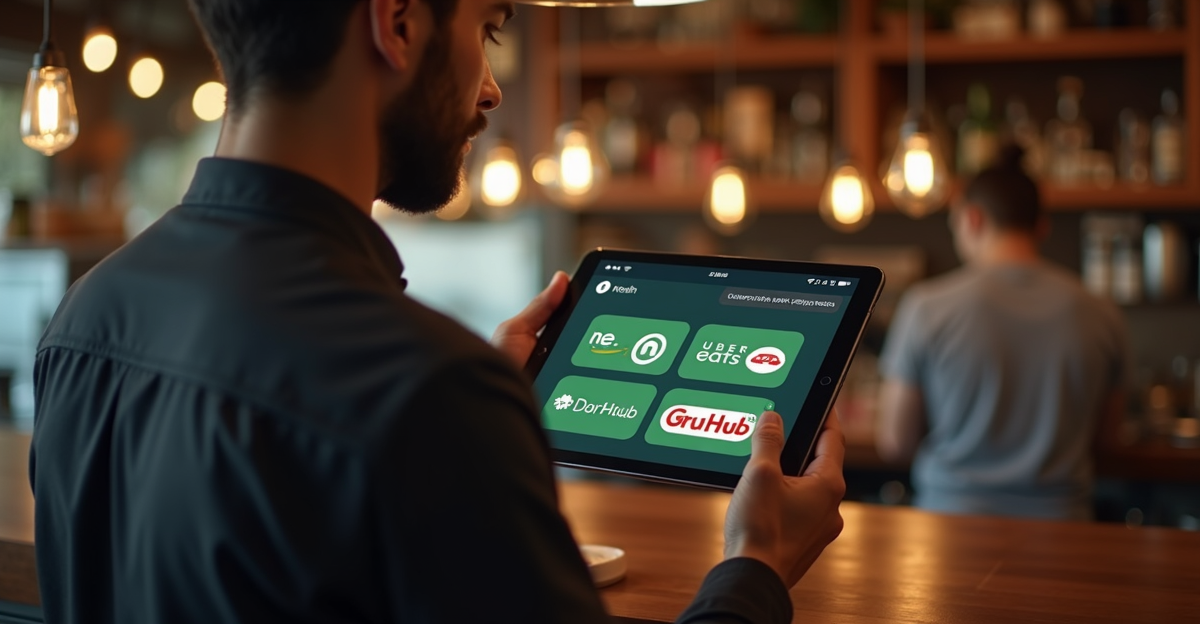
A delivery aggregator pulls orders from DoorDash, Uber Eats, Grubhub, and other platforms into a single tablet or POS integration. Instead of three tablets screaming at you, you get one stream. It also syncs your menu across platforms — when you 86 the salmon, that change pushes everywhere automatically.
What it does not do: reduce the commission DoorDash or Uber Eats charges you. That’s a completely separate conversation, and these tools have nothing to do with it. If you’ve been told otherwise, someone was overselling.
The aggregator category is also frequently confused with commission-free ordering platforms. Commission-free ordering platforms like ChowNow and Owner.com let customers order directly from your website, bypassing the marketplaces entirely. Aggregators do the opposite — they make the marketplaces easier to manage, not cheaper. Different problem, different tool.
One more thing: Chowly and ChowNow are completely different products. Chowly is an aggregator. ChowNow is a commission-free ordering platform. The names are confusingly similar and operators mix them up constantly. If you’ve read a Reddit post comparing the wrong two things, that’s probably why.
Otter vs Chowly vs Deliverect: Side-by-Side Comparison
| Feature | Otter | Chowly | Deliverect |
|---|---|---|---|
| Pricing | ~$49–$99/month | Custom quote (historically $400–$500/month) | ~€69–€166/month (Starter to Large) |
| Free Trial | Yes | No | No |
| Contract | No long-term contract at entry tier | Varies by contract | Annual contract + 90-day cancellation clause |
| POS Integration | Broad (incl. own POS) | Deep two-way with Toast & Square | Broad, 400+ integrations |
| Menu Sync | Yes | Yes | Yes |
| Own POS Product | Yes | No | No |
| Loyalty Integration | Limited | Strong (Toast, Square) | Limited |
| Best For | Single-location independents | Toast/Square operators who want loyalty | Multi-location chains |
| Pricing Transparency | Public | None | Public (EU pricing) |
Pricing checked April 2026. Deliverect pricing is listed in EUR; US annual contracts run approximately $1,428–$2,988 per location per year depending on order volume tier.
Otter: Best for Getting Started Without a Sales Call
Otter is the most operator-friendly option in this comparison, and that starts before you even sign up.
Pricing is public. You don’t have to sit through a demo to find out what it costs. Entry tiers run around $49–$99/month, there’s a free trial, and you’re not locked into a long-term contract at the base level. For a single-location restaurant that’s already stretched thin, that matters.
The feature set covers the core problems well: consolidated order management, menu sync across platforms, AutoAccept technology (so orders confirm without manual intervention), and an optional built-in POS if you don’t have one you love.
The complaints worth knowing: setup can take up to six months for some operators, based on user reports. That’s not a typo. Depending on your platform mix and how your existing POS is configured, onboarding isn’t always the quick win the marketing suggests. Printer compatibility is also limited to two brands, which catches people off guard if they’re not using supported hardware.
Still, for a restaurant owner who wants to solve the tablet chaos problem without a procurement process, Otter is the easiest entry point in the market.
Chowly: Best if You’re Running Toast or Square and Want Loyalty Integration
Chowly’s strongest argument is depth, not breadth.
Where Otter gives you a solid general aggregator, Chowly goes deep on POS compatibility (Toast, TouchBistro) and Square specifically. Two-way sync — meaning menu changes, 86s, and order data flow both directions in real time — is tighter here than most competitors. If your POS is the center of your restaurant’s world and you’ve already invested in that ecosystem, Chowly matches it more precisely.
The loyalty angle is Chowly’s real differentiator. If you’re running a Toast loyalty program or Square’s customer engagement features, Chowly can connect delivery order data back into that loyalty stack. That’s not something Otter or Deliverect does particularly well, and for independent restaurants building repeat business, it’s genuinely useful. If you’re still deciding which loyalty platform to anchor to, it’s worth reading how small restaurant loyalty program software stacks up before locking into Chowly’s ecosystem play.
The sticking points are real, though.
Pricing is opaque. Chowly doesn’t list pricing publicly. Historical references from restaurant operators put the cost in the $400–$500/month range — significantly more than Otter’s public entry tiers. For a single location doing moderate delivery volume, that math needs to pencil out. If loyalty integration adds meaningful customer retention, maybe it does. If you’re just looking for order consolidation, it probably doesn’t.
There’s no free trial, and you’ll need to go through a sales process to get numbers. That’s not a dealbreaker, but it does mean you’re investing time before you invest money.
Deliverect: Powerful, But Built for Someone Bigger Than You
Deliverect is the most feature-rich platform in this comparison. It also has the most documented complaints from small operators — and those two facts are related.
The platform integrates with 400+ POS and delivery systems. It handles high order volumes efficiently. The analytics and reporting layer is more robust than competitors. For a restaurant group running five or more locations, that depth is worth the price.
For a single-location independent restaurant? The experience is frequently frustrating.
The contract structure is aggressive. Annual contracts with 90-day cancellation clauses mean that if onboarding goes sideways — and multiple operators on r/restaurateur report multi-month onboarding failures — you’re still paying. There are documented cases of restaurants being charged monthly while onboarding was never completed. That’s a significant risk for a small operator with no IT department to manage the process.
US pricing translates to roughly $1,428–$2,988 per location per year, depending on order volume tier. That’s not outrageous for a busy multi-location operation. For a single restaurant doing under $1M in delivery revenue annually, it’s hard to justify against Otter’s public entry pricing.
Deliverect is a well-built product. “Well-built for someone else” is still the wrong tool.
Our Take: Which One Should an Independent Restaurant Actually Choose?
Vendor comparison pages never say “this tool is not for you.” So we will.
Most single-location restaurants should start with Otter. The pricing is transparent, the trial removes the commitment risk, and the core consolidation problem gets solved without a multi-month onboarding process. It’s not flashy, but it does the job for the operator who just needs the tablet chaos to stop.
Choose Chowly if: you’re already running Toast or Square loyalty programs and you want delivery orders feeding into that customer data. The premium is real — you’ll pay more — but the two-way sync and loyalty connection are genuinely better here. Do the math on customer retention before signing.
Avoid Deliverect unless you’re running multiple locations or you have IT infrastructure to manage a complex onboarding. The product is good. The sales process, contract terms, and onboarding track record for small operators are not.
Here’s the dirty secret this whole category avoids saying: all three tools solve the same core problem. The real differentiators aren’t features — they’re which POS ecosystem you’re already locked into and how much pain you’re willing to absorb in sales calls and onboarding. Once you’re live on any of these platforms, the daily experience is similar. The friction is getting there.
If you’re building out the rest of your operational tech stack, your back-of-house software stack for inventory and food cost management deserves the same scrutiny. Aggregators handle the front-end chaos. Inventory software handles the margin math. Both matter. And if you want a broader view of where delivery aggregators fit alongside everything else, the best AI tools for small restaurants in 2026 covers the full operational picture.
Frequently Asked Questions
What is the difference between Otter, Chowly, and Deliverect for a single-location restaurant?
All three consolidate delivery platform orders (DoorDash, Uber Eats, Grubhub) into one interface and sync your menu across platforms. The differences are in pricing transparency, POS depth, and who they’re actually built for. Otter targets smaller independent operators with public pricing and a free trial. Chowly goes deep on Toast and Square loyalty integration. Deliverect is built for multi-location chains and enterprise operators.
Which delivery aggregator is cheapest for a small independent restaurant?
Otter is the most accessible on price — entry tiers start around $49–$99/month with no long-term contract required at entry level. Chowly doesn’t publish pricing, but historical operator reports put it in the $400–$500/month range. Deliverect runs $1,428–$2,988 per location annually depending on order volume. Based on publicly available information, Otter is the most affordable starting point for a single-location operator.
Does Chowly or Otter integrate better with Toast and Square POS?
Chowly has the deeper integration with both Toast and Square, including two-way real-time sync and loyalty data connection. Otter integrates with both as well, but doesn’t match Chowly’s depth for operators who are heavily invested in the Toast or Square ecosystem and using loyalty programs.
Who owns your customer data — Otter, Chowly, or Deliverect?
None of these tools give you direct access to DoorDash or Uber Eats customer data — that’s controlled by the marketplaces themselves, not the aggregator. What Chowly does differently is connect delivery order data into your existing Toast or Square loyalty database, which means you can start building a picture of your delivery customers inside your own system. For truly owning customer relationships, commission-free ordering tools are the path, not aggregators.
Is Deliverect overkill for a restaurant doing under $1M in delivery revenue?
For most single-location restaurants in that range, yes. The annual contract with a 90-day cancellation window, the documented onboarding complexity, and the price point are mismatched with what a small independent restaurant actually needs. Deliverect earns its cost at multi-location scale. Below that, the risk-to-value ratio doesn’t favor it compared to Otter’s transparent, no-commitment entry.
The Bottom Line
The delivery aggregator decision comes down to where you are today, not what sounds best on a feature comparison page.
Start with Otter if you want to solve the problem now with the least friction. Look hard at Chowly if you’re running a Toast or Square loyalty program and can justify the premium. And unless you’re running multiple locations with IT support, skip Deliverect — not because it’s bad, but because it’s built for a different restaurant than yours.
The tablet chaos is solvable. The worst outcome is spending six months onboarding the wrong tool while your line cooks still manage three screens. Pick the one that fits where you are, not where you imagine you’ll be.