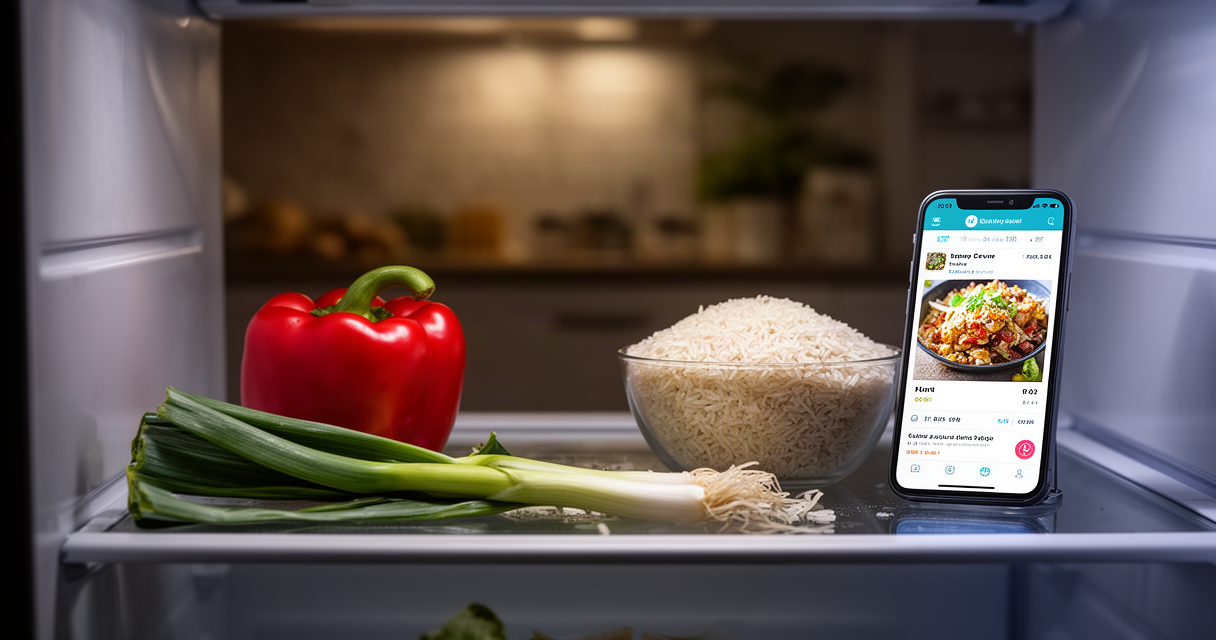
Half a bell pepper, a fist of leftover rice, one wilting scallion. Two kinds of apps promise to turn that into dinner: one searches a database of recipes real people actually cooked, the other invents a recipe on the spot from a language model. The gap between those two approaches matters more than either app admits.
Pick the wrong tool and the food goes in the trash anyway, which is the exact outcome both apps exist to prevent. That’s the stakes for anyone standing at an open fridge deciding whether an app is worth the thirty seconds of typing.
The quick answer: SuperCook wins for using up what’s about to spoil, because it points to real, human-vetted recipes instead of guessing. ChefGPT earns a place in the rotation when the goal is a macro target or a genuinely odd combination that no recipe database was built to match. DishGen is the one to be most careful with when the recipe needs to just work — it has no tested-recipe database behind it at all.
The full breakdown below covers what each app actually does under the hood, where each one fails, and which to open first tonight.
Is SuperCook Actually AI, or Just a Very Good Filter?
SuperCook is not generative AI. It is an ingredient-matching engine layered over a database that aggregates recipes from an estimated 18,000 recipe sites, all of which existed before a user ever typed an ingredient in. The app doesn’t write a recipe — it filters existing, previously published recipes down to the ones that match what’s on hand.
That distinction sounds like a technicality, but it changes what the tool is good for. A database filter can only ever return a recipe that a human wrote, tested, and published somewhere. A generative tool can return something that has never been cooked by anyone, including the model that wrote it.
For the specific job of using up food before it spoils, that difference is the whole story. A recipe with a “roast a steak for three hours” instruction — the kind of failure one home cook described trying generative AI on r/Frugal, noting the results were “pretty good” overall but “not totally reliable” — doesn’t just waste time. It risks wasting the ingredients being rescued in the first place.
Calling SuperCook “not really AI” isn’t a knock against it. A tested-recipe database is a more trustworthy foundation for a leftovers app than a model that has never seen a stove.
SuperCook vs ChefGPT vs DishGen: Quick Comparison Table
All three apps target the same shelf in the kitchen: what to cook with what’s already there. The mechanism behind each one is different enough to change how much a cook should trust the output.
| SuperCook | ChefGPT | DishGen | |
|---|---|---|---|
| Mechanism | Ingredient-matching filter over a database of existing recipes | Generative AI (PantryChef, MacrosChef modes) | Purely generative AI, no recipe database |
| Pricing | Free, ad-supported | Free tier: 10 generations/month. Pro: $2.99/month or $29.99/year, 7-day trial | Free: 15 credits/month. Premium: from $7.99/month, 7-day trial |
| Best for | Using up ingredients before they spoil, with recipes that have actually been cooked before | Macro-targeted or dietary-specific recipes, unusual ingredient combinations | Creative brainstorming when the output won’t be trusted blindly |
Pricing reflects each app’s official pricing page as checked in September 2026.
The pattern across the row is consistent with the mechanism row above it: the free, database-backed option is also the one best suited to the leftovers job specifically. The two paid, generative options add flexibility SuperCook doesn’t have — at the cost of reliability SuperCook does have.
SuperCook: What It’s Good At (and Where It Falls Short)
SuperCook’s core strength shows up repeatedly in community feedback: it’s genuinely good at surfacing recipes built around ingredients that are close to expiring. “This app is amazing,” one home cook wrote on r/Frugal. “Target items you know are about to expire and just scroll until something looks good.”
A Google Play reviewer put the value proposition even more bluntly: “seriously the most useful app to ever exist. I can find recipes using items that are close to expiring… its pretty much ad free and no subscription is needed to use it to its full extent.” The zero-cost, zero-subscription model is unusual in a category where most competitors gate the core feature behind a paywall within the first week.
The limitations are real, and they start with pantry tracking. SuperCook doesn’t automatically know what’s in a fridge. “Supercook doesn’t actually track what’s in your pantry,” a user on r/Frugal explained. “You just self-report the items that you have on hand.” Every session starts with manually re-entering ingredients, which is friction the app never fully solves.
Ingredient classification is the second recurring complaint. An App Store reviewer flagged the app for misreading what’s actually being typed in: “sometimes it assumes you have things you don’t have like thinking bread is dinner rolls… mayonnaise is marked as vegan.” Those aren’t catastrophic errors for a rice-and-vegetables dinner, but they’re exactly the kind of mistake that matters for anyone filtering by dietary restriction.
ChefGPT: What It’s Good At (and Where It Falls Short)
ChefGPT’s pitch is personalization SuperCook can’t offer. Its PantryChef mode generates a recipe from listed ingredients the way SuperCook does, but its MacrosChef mode adds something SuperCook has no equivalent for: recipes built around a specific protein, carb, or calorie target. For a cook counting macros around leftover chicken and rice, that’s a genuine feature gap SuperCook doesn’t close.
The free tier caps out at 10 generations a month, with Pro unlocking unlimited generation for $2.99/month or $29.99/year, backed by a 7-day trial. That’s a low price point relative to most subscription food apps.
The reliability problems show up in the generation itself, not the pricing. One App Store reviewer described a recipe where the name and the method didn’t match at all: “I love the idea but just downloaded it and it generated my first recipe and the title was nothing to the actual meal. Stuffed chicken breast with peanut butter rice… it was actually wrapping a dough lined with peanut butter around the chicken breast… Also the instructions didn’t provide measurements for the rice.” A generated recipe missing a core measurement isn’t a minor inconvenience — it’s the app failing at the one job it exists to do. This is the same failure mode covered in more detail in why AI-generated recipes go wrong, where method-name mismatches and missing quantities turn out to be a structural risk of generative recipe tools, not a one-off bug.
Monetization pressure is the other recurring complaint. “Was looking for something I could put in ingredients I have around the house,” one App Store reviewer wrote. “Rather then letting me try it out… it starts pushing memberships on me. Every time I said no it kept bringing up stupid roulette wheels bringing the price down further.” Gating the core feature behind an upsell loop before a first-time user can evaluate it is a design choice that works against trust, not for it.
Where DishGen Fits In
DishGen sits furthest from SuperCook on the mechanism spectrum. It is purely generative — there is no underlying database of tested recipes to fall back on, and every output is assembled fresh from whatever ingredients are entered. The free tier includes 15 credits a month, with Premium starting from $7.99/month and a 7-day trial.
That purely generative design is also its clearest weakness. A Google Play reviewer summed it up: “Creative recipe ideas indeed… This app doesn’t provide real recipes, it just makes up a recipe without consideration for what foods belong together in a meal.” That’s a materially different failure mode than ChefGPT’s occasional measurement gap — it’s the app producing flavor combinations that were never grounded in anything a person actually cooked.
DishGen’s maker has been explicit about the mission behind the product. Writing on Product Hunt, the maker framed it as a food-waste tool first: “My mission in creating this project is to reduce food waste — currently 31% of groceries purchased are thrown away… costs the average family $150/month. With DishGen, it’s easy to enter leftover ingredients and get creative, bespoke recipes to use exactly what you have.” Those figures are the maker’s own stated claim about the food-waste problem, not an independently verified statistic — worth noting as context for the app’s intent, not as a performance number for the app itself.
The mission is sound. The execution, per the Google Play feedback above, doesn’t yet match a tool built to be trusted with dinner.
Our Take: Which One to Actually Open Tonight
SuperCook is the stronger pick for most people staring into a fridge trying to use up what’s about to go bad. It’s free, it draws from recipes that have actually been tested by someone, and the community feedback backs that up consistently — the “scroll until something looks good” workflow one r/Frugal user described is exactly the leftovers use case this comparison is built around.
ChefGPT earns its spot when SuperCook comes up empty. A genuinely odd combination — leftover taco filling plus half a bag of frozen peas — may not match anything in SuperCook’s recipe database, and a macro or dietary target adds a constraint SuperCook was never built to filter on. ChefGPT’s PantryChef and MacrosChef modes cover exactly that gap, at $2.99/month for the Pro tier.
DishGen is the one to treat cautiously. Its lack of a tested-recipe backbone means the output can’t be trusted the way a database-sourced recipe can — the “doesn’t provide real recipes” critique from Google Play is a structural issue with the generative-only approach, not a bug that gets patched next update. Novelty and reliability are pulling against each other here, and reliability matters more on a weeknight.
The bigger point sits above any one app comparison. AI’s real win in a kitchen is cutting food waste and decision fatigue — the same problem covered from the restaurant side in how AI food waste tools work at scale, where inventory-matching software does for commercial kitchens what SuperCook does for a home fridge. It is not “AI chef” novelty that reinvents what a meal should be. None of these three apps replace knowing how to cook — they replace the five minutes of staring at a fridge deciding what to do with it. For a broader look at which apps handle that job well beyond just leftovers, see best AI meal planning apps for home cooks.
Frequently Asked Questions
Is SuperCook actually AI, or just a filter?
SuperCook is an ingredient-matching filter over a database aggregating recipes from roughly 18,000 sites — not a generative AI model. It doesn’t write recipes; it surfaces existing, human-tested ones that match the ingredients entered. That’s a strength for reliability, not a limitation to apologize for.
Does ChefGPT make up ingredients?
ChefGPT generates recipes rather than pulling from a tested database, and App Store reviews document real gaps — missing measurements and a recipe whose title didn’t match its method. It’s usable, but every generated recipe deserves a read-through before cooking, especially for quantities.
What’s the actual difference between SuperCook, ChefGPT, and DishGen?
SuperCook filters real, previously published recipes by ingredient match. ChefGPT and DishGen both generate recipes from scratch using AI, with ChefGPT adding macro-targeting modes and DishGen skipping any recipe database entirely. The database-versus-generative split is the core distinction driving reliability differences between all three.
Can AI recipe apps be trusted with food allergies?
Treat any AI-generated or AI-filtered recipe as a starting point, not a guarantee, when allergies are involved. SuperCook’s own reviews document misclassifications — mayonnaise marked as vegan, for example — so double-checking every filtered or generated recipe against the actual ingredient list is a necessary step, not an optional one.
Which app is better for using up leftovers specifically?
SuperCook, for most situations. It’s free, draws on tested recipes, and is purpose-built around the “what can I make with what I already have” job. ChefGPT is the better fallback only when SuperCook has nothing that matches.
The Real Question Isn’t Which App — It’s Which Job
SuperCook wins the leftovers job because it’s built on recipes someone already cooked, not recipes a model is guessing at. ChefGPT is worth the $2.99 when the combination is too weird or the macros too specific for a database search to catch. DishGen’s mission is right and its output, per current reviews, isn’t there yet.
The practical move: type what’s about to go bad into SuperCook first. Only turn to ChefGPT if nothing comes back — and read the instructions fully before trusting any generated measurement.
The best use of AI in a kitchen this week isn’t a tool that reinvents cooking. It’s the one that keeps that limp celery out of the trash.