A restaurant that added catering in the last year has probably fielded a cold call or two pitching a $130-230-a-month “AI-powered catering platform.” The pitch usually sounds reasonable: automate the quoting, cut the back-and-forth, let the AI draft proposals while staff run the line.
Catering margins are already thin once delivery, packaging, and staffing get factored in. A software bill that doesn’t earn its keep is a real hit to that margin, not a rounding error.
The quick answer on the best AI catering software for small restaurants in 2026: restaurants doing fewer than about 10-15 catering orders a month probably already have what they need in their POS. Better Cater, at roughly $57 a month on an annual plan, is the cheapest dedicated catering tool worth considering. QuoteIQ, starting around $29.99 a month, is the best-value AI quoting option, though it wasn’t built for restaurants specifically. Collaborative Kitchens AI and CaterZen make sense once catering volume actually justifies a $130-230 monthly platform. And on ezCater, restaurants are paying somewhere between 15 and 25 percent of each order for reach they could largely build themselves.
The rest of this breaks down where each option fits — and where it doesn’t.
Do You Even Need Dedicated AI Catering Software Yet?
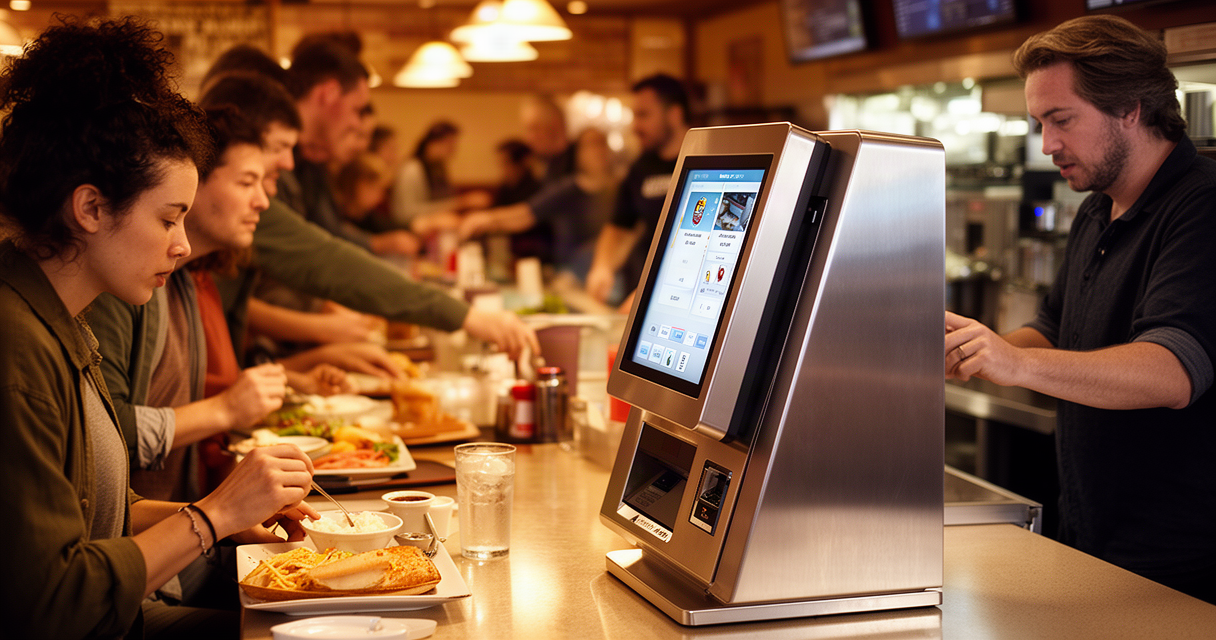
Most restaurants doing under 10-15 catering orders a month, even with a handful of repeat corporate clients, are probably fine running catering through the POS they already have. Toast’s Catering & Events Pro add-on and Square’s online ordering (which has a free basic tier) both handle order intake, payment, and basic scheduling without a per-order commission.
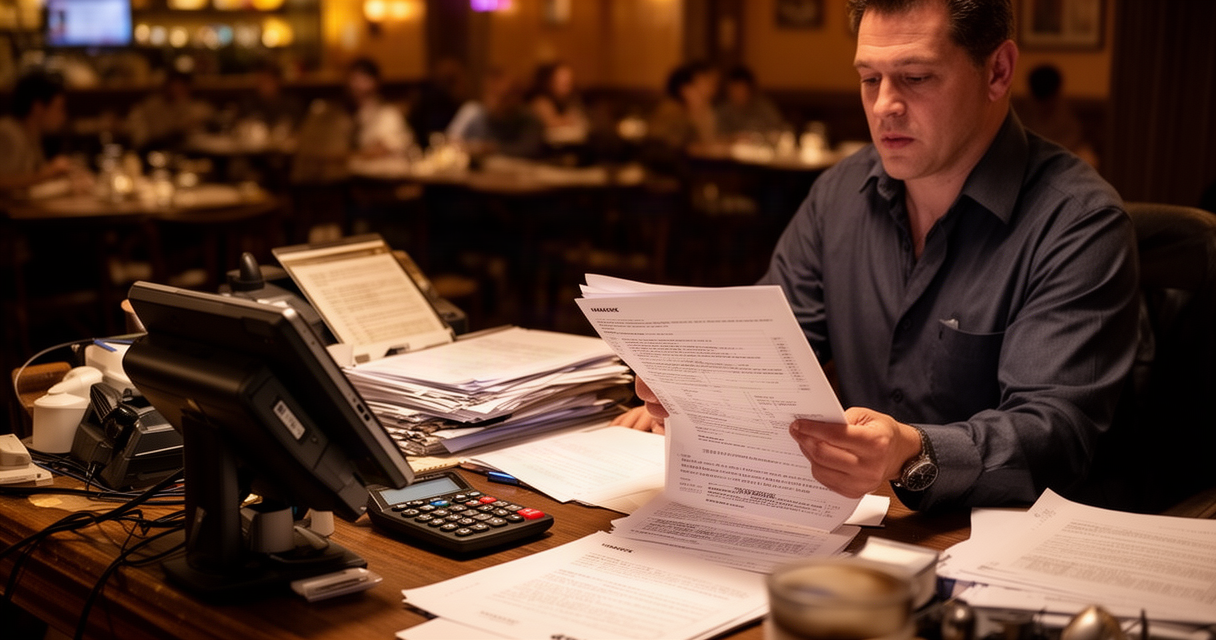
The signs a restaurant has actually outgrown that setup are specific: proposals and banquet event orders (BEOs) eating hours of manager time every week, orders getting missed because leads arrive across email, text, and phone with no single inbox, or a total lack of visibility into which quotes convert and which go cold.
Absent those signs, a $130-230-a-month AI-native platform is solving a volume problem that doesn’t exist yet. One operator on r/restaurantowners doing roughly $150,000 a year in catering said dedicated catering software “just isn’t a priority” at that level — the ordering tools already built into their existing POS system cover the workflow fine.
Catering Software vs. Event Management Software — Don’t Buy the Wrong Category
This is a load-bearing distinction that a lot of vendor marketing blurs on purpose. Catering order and quoting software — the category this article covers, including CaterZen, Better Cater, QuoteIQ, Collaborative Kitchens AI, FlashCater, and the ezCater marketplace — is built around taking a catering request, pricing it, and getting it invoiced and paid.
Event and private-dining management software is a different job: seating charts, venue timelines, room-block coordination, staffing for a physical event space. That’s the territory of restaurant event management software like Tripleseat- or Caterease-style platforms.
Some tools blur the line. CaterZen, in particular, extends into event-space and full-service catering workflows that start to overlap with event management. Buying the wrong category — say, an event-space booking tool for a restaurant that only does off-premise drop-off catering — wastes both money and setup time.
The 5 Best AI Catering Software Options for Small Restaurants, Compared
Pricing below is reported and approximate. Verify current numbers on each vendor’s own page before buying — catering software pricing shifts often, and a couple of these figures conflict across sources.
| Tool | Type | Starting Price (verify) | Standout AI Feature | Best For | Catering-Only? |
|---|---|---|---|---|---|
| POS-first (Toast Catering & Events Pro / Square Online Ordering) | Built into existing POS | Included or add-on tier; Square has a free basic tier | None dedicated — standard order management | Restaurants under about 10-15 catering orders/month | No |
| Better Cater | Dedicated catering ops | About $57/month (annual; about $69 month-to-month) | Proposal, BEO, and pack-list automation (not AI-native) | Restaurants wanting a cheap dedicated tool without AI overhead | Yes |
| QuoteIQ | Field-service CRM adapted for catering | From about $29.99/month | AI Estimator drafts a full quote from a price book | Owners who want fast AI quoting on a tight budget | No — not restaurant-native |
| FlashCater | ezCater alternative / owned-demand builder | Reported at about $79-99/month (figures conflict; verify) | Built specifically to compete with marketplace lead-gen | Restaurants trying to build owned catering demand instead of renting it | Yes |
| Collaborative Kitchens AI | AI-native catering platform | From about $129/month (vendor-reported) | Inbox triage, auto-quoting, invoicing, client portal | Restaurants with proven catering volume wanting full AI automation | Yes |
| CaterZen | Mature, full-featured catering + event suite | $179-229/month | End-to-end workflow from drop-off through full-service events | Higher-volume caterers; crosses into event management | Partial — extends into event mgmt |
| ezCater (marketplace) | Order marketplace, not installed software | No monthly fee; commission-based (reported 15-25% depending on plan) | Demand marketplace with built-in reach | Restaurants chasing net-new catering leads | Yes — marketplace only |
What Each Tool Actually Does
Better Cater
Better Cater runs about $57 a month on an annual plan (closer to $69 billed monthly, per Software Advice’s listing), and it covers proposals, BEOs, pack lists, basic food costing, and a lightweight CRM. It’s not AI-native — the quoting is manual, not auto-generated — but for restaurants that just want organized catering paperwork at a low price, that’s arguably a feature, not a gap.
Software Advice lists it at 4.8 out of 5 stars across 33 reviews. That’s a solid aggregate rating, but 33 reviews is a small sample, and there’s no independent Reddit or forum discussion of Better Cater to cross-check it against — the star rating is essentially the only outside signal available.
QuoteIQ
QuoteIQ starts around $29.99 a month and centers on its AI Estimator, which drafts a full quote directly from a stored price book rather than requiring a manager to build one line by line. For restaurants whose biggest catering time sink is writing quotes, that’s the single most directly useful AI feature on this list.
The catch: QuoteIQ was built as a field-service CRM for contractors — lawn care, cleaning, home services — and adapted for catering rather than designed for it from the ground up. App Store sentiment is generally positive, but one reviewer flagged it as “too costly” and complained that plans “keep changing,” which is worth weighing against the low headline price. Because the AI Estimator is only as accurate as the numbers behind it, the quote quality depends heavily on whether the price book is built on real recipe costing software data rather than rough guesses.
Collaborative Kitchens AI
Collaborative Kitchens AI starts around $129 a month and is the most AI-forward option here: automated inbox triage for catering inquiries, AI-drafted quoting, invoicing, and a client-facing portal. It’s priced accordingly.
Important caveat: the pricing and feature claims come from the vendor’s own blog, not an independent listing or aggregator — they should be treated as vendor-stated and verified independently before signing anything. There’s also no independent restaurant-owner discussion of it turning up in community threads, so the evaluation here rests on the vendor’s own description rather than outside confirmation.
FlashCater
FlashCater positions itself as an ezCater alternative — a tool for building owned catering demand instead of renting it from a marketplace. Reported pricing is inconsistent across sources: some pages put it around $79 a month, others around $99. Given the conflict, the safest move is to treat both figures as unverified and confirm the current number directly with the vendor before budgeting for it. As with Collaborative Kitchens AI, there’s no independent community discussion of FlashCater to lean on.
CaterZen
CaterZen is the most mature and most expensive option here, running $179-229 a month per Capterra’s listing, where it holds a 4.8 out of 5 rating across 55 reviews — a meaningfully larger sample than Better Cater’s. It covers everything from simple drop-off catering through full-service event workflows, and some of that scope crosses into event-space and event-management territory rather than staying purely in order/quoting.
That breadth is the appeal for restaurants doing real catering volume, and the reason it’s a poor fit for a restaurant just starting out. Paying $200 a month for event-management features a drop-off-only catering operation will never use is the exact overspend this article opened by warning against.
Which AI Features Actually Save Time (and Which Are Fluff)
The genuinely useful AI features in this category do one job: remove the most time-consuming manual task in catering sales, which is turning a request into an accurate, priced quote. QuoteIQ’s AI Estimator and Collaborative Kitchens AI’s auto-quoting both target that directly. Inbox and invoice automation — sorting incoming catering requests and generating invoices without a manager retyping totals — is the second tier of genuinely useful automation, because it removes real email triage time.
“AI demand forecasting,” by contrast, is where skepticism is warranted. Several vendors in this space market forecasting features with no visible track record at single-location restaurant volume — a small operation doesn’t generate enough historical order data for a forecasting model to be meaningfully accurate, no matter how the feature is marketed.
The test that separates the two: does the feature replace an hour of real manual work, or does it just sound good on a sales call? Most restaurants doing under 20 catering orders a month don’t need a $300-a-month AI-native platform. They need one feature — accurate, fast quoting — done well and cheaply.
What This Actually Costs You (Payback, Not Averages)
There’s no reliable industry-average figure for what catering software should cost relative to catering revenue, so any framework here has to use stated, illustrative assumptions rather than a real average.
As an example only: if a catering tool costs $130 a month and the average catering order nets $150 in margin, roughly one incremental catering event a month covers the software bill. Below that, the tool is a net cost; above it, it’s paying for itself. The actual break-even point for any given restaurant depends entirely on its own order volume and margin — this is a framework to run the numbers through, not a number to copy.
The same math applies, in reverse, to ezCater’s commission. An operator reporting an 18 percent effective rate on a $2,500 catering order is handing over $450 off the top of a single order. If that order comes from a repeat client the restaurant could have booked directly, that commission isn’t a one-time acquisition cost — it’s a recurring tax on every future order from the same client.
One operator on r/restaurantowners running roughly $600,000 a year in catering said that volume justified hiring a full-time catering manager rather than layering on more software. Another pointed out that the commission saved by moving repeat clients off a marketplace and onto an owned channel could, over time, help fund exactly that kind of hire.
The ezCater Commission Tradeoff, in Restaurant Owners’ Own Words
ezCater’s own knowledge base states marketplace commission around 15 percent plus roughly 2.75 percent payment processing, or about 7 percent plus 2.99 percent processing on its ezOrdering product — though the company notes rates vary by agreement. Real operators report paying more.
One operator on r/restaurantowners said their actual effective rate landed closer to 18 percent once processing fees were counted, and added that ezCater’s contract terms restricted how they could price the same menu items sold through their own channels. Another said it was “worth it not to give ezCater a cent” and instead built catering demand through their own site and marketing.
A third called the marketplace their lowest-margin order channel by a wide margin and questioned whether anyone building ezCater’s product had actual restaurant operating experience. Not every operator lands there, though — one countered that the commission is worth it at real volume, because the marketplace functions as a sales hire the restaurant doesn’t have to pay salary and benefits for.
The reasonable middle ground: a marketplace like ezCater is paid acquisition for net-new leads, not a permanent home for repeat business. Once a client orders more than once, the case for owning your ordering channel instead of paying marketplace commission on every repeat order gets stronger with each order.
Our Take: Start Cheap, Graduate When the Numbers Say So
The right sequence for most small restaurants runs in order of proven need, not order of feature list. Start with the POS already in place for the first several months of catering. Move to Better Cater or QuoteIQ once catering hits roughly 10-15 orders a month and quote-writing or paperwork is visibly eating manager hours. Only consider Collaborative Kitchens AI or CaterZen once catering has become a proven, growing line of revenue, not an experiment. Use ezCater selectively — for net-new lead acquisition, not as the default home for every order — alongside the rest of a restaurant’s best AI tools for small restaurants stack.
That sequencing costs nothing to follow and prevents the single most common catering-software mistake: buying scale before the volume exists to justify it.
Frequently Asked Questions
What’s the cheapest catering software for a small restaurant?
QuoteIQ, starting around $29.99 a month, is the cheapest dedicated option with AI quoting. Better Cater, at roughly $57 a month on an annual plan, is the cheapest option built specifically for restaurant catering rather than adapted from another industry. For very low volume, a restaurant’s existing POS ordering tools may cost nothing extra at all.
Is ezCater worth the commission?
It depends on whether the order is net-new or repeat. Vendor-stated commission runs around 15 percent plus processing fees, though some operators on r/restaurantowners report effective rates closer to 18 percent. For a first-time client the restaurant couldn’t have reached otherwise, that’s a reasonable acquisition cost. For a repeat client, it becomes a recurring tax worth trying to move off the marketplace.
Do I need catering software if I already have a POS?
Not necessarily. Toast’s Catering & Events Pro and Square’s online ordering both handle catering order intake without a dedicated tool. Restaurants under roughly 10-15 catering orders a month, without heavy proposal or BEO workload, are usually fine on the POS alone.
What’s the difference between catering software and event management software?
Catering order and quoting software handles pricing, proposals, and invoicing for food orders. Event management software handles the logistics of a physical event — seating, venue timelines, staffing. Some tools, like CaterZen, blur the two; most small restaurants doing drop-off or pickup catering only need the first category.
Is QuoteIQ actually built for restaurants?
No — QuoteIQ started as a field-service CRM for contractors like lawn care and cleaning businesses and was adapted for catering use cases. Its AI Estimator works well for quoting, but restaurants should expect some workflow friction from a tool that wasn’t restaurant-native from the start.
How much does restaurant catering software cost in 2026?
Reported pricing on dedicated catering tools ranges from about $29.99 a month (QuoteIQ) to $179-229 a month (CaterZen), with AI-native platforms like Collaborative Kitchens AI starting around $129 a month. ezCater has no flat monthly fee but charges commission per order instead. All figures should be confirmed on the vendor’s current pricing page before buying.
What are the best ezCater alternatives for restaurants?
FlashCater markets itself directly as an ezCater alternative built around owned demand rather than marketplace commission, though its reported pricing conflicts across sources and should be verified. Beyond dedicated tools, building demand through a restaurant’s own website and repeat-client relationships is the lowest-cost alternative to marketplace commission long-term.
The Bottom Line
Most small restaurants don’t need a $130-230-a-month AI-native catering platform on day one. The POS already covers low-volume catering, and Better Cater’s roughly $57-a-month tier covers the next step up without AI overhead. AI quoting and forecasting tools earn their price only once catering is a proven, growing part of revenue — not before.
The practical next step: pull the last 90 days of catering orders from the POS. Under 10-15 a month, stick with the current setup. Above that, trial Better Cater or QuoteIQ before signing anything over $100 a month. Anyone renewing with ezCater should calculate last quarter’s actual commission paid before doing it again.
The best catering software for a lot of small restaurants right now is the one they’re already paying for and not using.
References
- Software Advice — Better Cater listing (rating and pricing) — https://www.softwareadvice.com/catering/better-cater-profile/
- Capterra — CaterZen listing (rating and pricing) — https://www.capterra.com/p/caterzen/
- QuoteIQ — pricing page — https://www.quoteiq.com/pricing
- QuoteIQ — AI Estimator product page — https://www.quoteiq.com
- QuoteIQ — App Store listing (reviewer sentiment) — https://apps.apple.com/app/quoteiq
- Collaborative Kitchens AI — vendor blog (self-reported pricing and features; verify independently) — https://collaborativekitchens.ai/blog
- FlashCater — vendor blog (pricing figures conflict across pages; verify independently) — https://flashcater.com/blog
- ezCater — knowledge base, ezOrdering and marketplace service fees — https://get.ezcater.com/help
- Toast — Catering & Events Pro product page — https://pos.toasttab.com/products/catering-and-events
- Square — Online Ordering product page — https://squareup.com/us/en/online-store/ordering
- r/restaurantowners — thread on catering software volume and priority at roughly $150k/year in catering revenue
- r/restaurantowners — thread on ezCater effective commission rate and menu pricing restrictions
- r/restaurantowners — thread on switching away from ezCater to an owned ordering channel
- r/restaurantowners — thread on ezCater as lowest-margin order channel
- r/restaurantowners — thread on catering volume, full-time catering manager hiring, and commission savings
Reported pricing and commission rates vary by vendor, plan, and market, and change over time — verify each vendor’s live pricing page before buying. This is not financial advice.