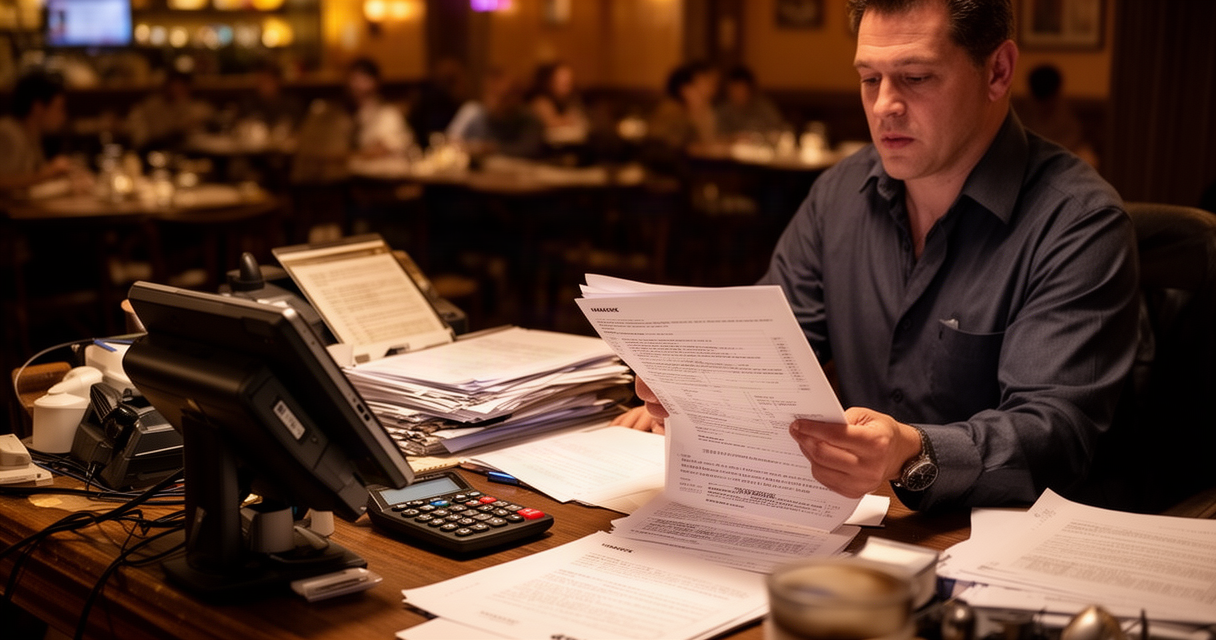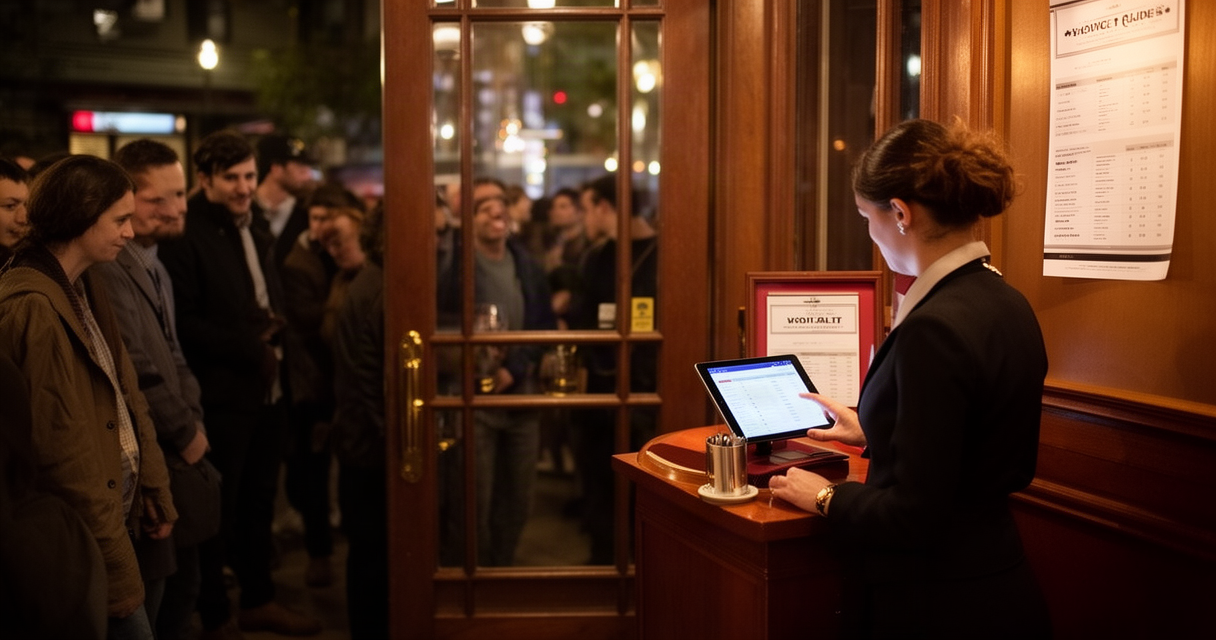
A 40-minute quote on a Friday night that turns into 65 minutes doesn’t just annoy the table waiting for it. It sends the next four parties walking to the place next door that has an open patio. For a one-to-three-location independent running the floor on a clipboard or a chalk-marked whiteboard, that walk-away is the actual cost center — not a missing “AI host” gimmick.
The best AI waitlist and table management software for small restaurants in 2026 solves that specific problem: predicting wait times closer to reality and getting a text out fast enough that the party is still standing there when the table opens. Most software marketed as “AI waitlist” in 2026 is a digital sign-up sheet with SMS bolted on — useful, but not intelligent.
Ranked for a walk-in-heavy independent with no dedicated host stand: Waitwhile is the strongest default pick, with a real free tier and the most complete general feature set. NextMe is the better call for an operator watching every dollar, thanks to a genuinely usable free tier. Hostme earns its place only when the operation needs full table management — a real floor plan, reservation calendar, and event booking — and can absorb a monthly bill north of $100. Everything else in the category is either a rebrand of these three ideas or too thin to recommend outright. The breakdown below covers what each tool actually does, what it costs, and where the “AI” label is doing more marketing than math. For a wider view of the category, see the roundup on the best AI tools for small restaurants.
Reservations vs. Walk-In Waitlist: Two Different Problems
A reservation system and a waitlist app solve different failure modes, and small operators often buy the wrong one first.
Reservation platforms manage bookings made in advance — a party commits to a time slot days or hours out. Waitlist software manages the chaos that happens after someone walks through the door with no reservation and the dining room is full. The comparison of reservations vs. walk-in waitlist tools covers the booking side in depth; this article is strictly about the walk-in queue.
Most independents without a dedicated host stand run almost entirely on walk-ins. A reservation platform sitting idle while a line forms at the door solves the wrong problem. The waitlist tool is the one that touches revenue on a Friday night — it’s the difference between a party getting a text at the right moment and a party leaving because nobody could tell them how long the wait actually was.
What “AI Waitlist” Actually Means in 2026
The category split into two tiers by 2026, and the marketing on both sides uses the same word.
Tier one — SMS-based digital sign-up. A host enters a name, party size, and phone number. The system texts a confirmation and, when the table’s ready, a “come on in” message. Some tools add a static wait-time estimate calculated from a running average of recent seatings. This is the baseline every tool in the category offers, and it is not artificial intelligence in any meaningful sense — it’s a database and a texting API.
Tier two — predictive and adaptive. A smaller set of tools pulls live data — how long tables have actually been occupied right now, historical turn times by day-part and party size, sometimes a POS integration for real seated-time data — and recalculates wait estimates continuously rather than averaging a fixed window. This tier can also flag seating combinations a host might not think to try (splitting a 6-top into two deuces during a rush, for example).
The gap between these tiers is where most of the marketing overstatement lives. A text message and a rolling average is not predictive AI — it’s automation, and automation is genuinely useful, but it’s not the same claim. The tools reviewed below get evaluated on which tier they actually deliver, not which tier their landing page implies.
Quick-Scan Comparison
| Tool | Starting price (as of this writing) | Free tier | Core “AI” feature | POS integration | Best for |
|---|---|---|---|---|---|
| Waitwhile | Free tier available; Starter around $31/mo | Yes — up to 50 visits/mo | SMS automation + wait-time estimates from live queue data | Limited/via integrations — verify current list | Most walk-in-heavy independents wanting a real free tier |
| NextMe | Free tier available; Starter around $49.99/mo | Yes — 100 SMS/mo, 1 location, 1 user | SMS-driven queue management, basic wait estimates | Minimal — verify before assuming | Single-location operators on a tight budget |
| Hostme | No free tier; Mezzo around $109/mo | No | Configurable wait-time calc (current seated time + historical averages) | Contested — see below | Operators needing full floor plan, table management, and event booking |
Verify all current pricing directly on each vendor’s page before budgeting — SaaS pricing tiers shift, and none of these vendors were checked more recently than this article’s publish date.
Waitwhile — The Default Pick
Waitwhile’s free tier covers up to 50 visits per month, which is enough for a slower single-location spot to run the whole waitlist without paying anything, as of this writing. The Starter plan runs around $31/month and Business around $55/month, with SMS billed separately on top of the plan cost — verify current pricing on Waitwhile’s page, since SMS pass-through costs are the line item operators most often get surprised by.
The core value is the SMS loop and wait-time estimation pulled from the live queue rather than a static number typed in by a host. That is the tier-two behavior described above, though the accuracy of that estimate still depends heavily on how consistently staff mark tables as seated and cleared in real time — a system is only as good as the data going into it.
Community feedback on the tool skews toward reliability over flashiness. Operators discussing waitlist software in r/restaurateur have generally described Waitwhile’s SMS delivery as consistent during high-volume shifts, which matters more on a Friday night than any predictive feature — a text that arrives 90 seconds late defeats the purpose regardless of how the wait time was calculated. A recurring complaint in the same threads is that the free tier’s 50-visit cap gets hit fast at any restaurant doing real weekend volume, pushing operators to the paid tier sooner than the marketing implies.
For a small independent testing the category for the first time, Waitwhile is the lowest-risk starting point: real free tier, straightforward setup, no long-term contract required to try it.
NextMe — Best for a Tight Budget
NextMe’s free tier is narrower but genuinely usable for a single location: 100 SMS per month, one location, one user, as of this writing. For a low-volume neighborhood spot that isn’t texting hundreds of parties a week, that ceiling may never get hit. Paid tiers start around $49.99/month for Starter and around $99.99/month for Business — both above Waitwhile’s paid entry point, which makes the free tier the actual draw here rather than the paid plans.
The AI framing is mostly SMS automation and basic queue-based wait estimates — closer to tier one than tier two in the framework above. That doesn’t make it a bad tool; it makes it an honestly-priced digital sign-up sheet rather than a predictive system, and operators who don’t need prediction shouldn’t pay extra for the appearance of it.
An iOS App Store review of NextMe described the app as simple to set up on a first shift with no training needed for new hosts — a meaningful point for a small operation where the person running the waitlist changes week to week and can’t be expected to learn a complex system. A G2 reviewer covering the category more broadly noted that lighter waitlist tools like NextMe tend to feel underpowered once a restaurant adds a second location or wants deeper reporting, which tracks with the one-location, one-user ceiling on the free tier.
NextMe is the right call for an operator who wants SMS automation without committing budget until the tool proves its worth, and who isn’t expecting genuine predictive accuracy from the free or entry-level tiers.
Hostme — Full Table Management, No Free Tier
Hostme is a different category of tool wearing the same “AI waitlist” label. It bundles a digital floor plan, table management, reservation calendar, and event/private-party booking into one system — closer to a full front-of-house platform than a standalone waitlist app. That breadth is the case for it and the reason it costs more: Mezzo runs around $109/month (around $98/month billed annually) and Grande around $169/month (around $152/month annually), as of this writing, with no free tier at any level.
Hostme’s wait-time feature is best described precisely rather than by its marketing label: it’s a configurable calculation built from current seated time plus historical averages by party size and day-part. Hostme’s own product pages don’t consistently brand this “AI,” even though a number of third-party listicles covering the category do. That gap between third-party framing and the vendor’s own language is worth noticing — it’s a reasonable signal to apply to any tool in this space before taking a “powered by AI” claim at face value.
The same skepticism applies to Toast integration. Several third-party comparison articles list Hostme as Toast-integrated, but Hostme’s own public feedback board has an open, unresolved feature request for Toast integration as of this writing — which suggests the connection isn’t a confirmed, live, native integration despite what secondary sources claim. Any operator running Toast and considering Hostme specifically for that reason should verify current integration status directly with Hostme before signing, not from a listicle. For background on what POS integration actually enables, the POS integration comparison covers how Square, Toast, and Clover each handle third-party connections.
The private-event and brunch-party booking layer is a real differentiator for operators who host regular private parties or seasonal brunch service — a use case a bare-bones waitlist app doesn’t touch at all. A restaurant leaning on that side of the business more than pure walk-in flow may get more value from Hostme’s bundled approach than from bolting a separate tool onto a waitlist app; the event management software comparison covers that category directly for operators weighing a dedicated tool instead.
Hostme is the pick only for operators who need the full floor-plan-and-events package and have the budget for it. For a pure walk-in queue with no host stand and no private events, it’s more system than the job requires.
Honorable Mentions
Waitlist Me (also marketed as Waitly) is a lighter, cheaper alternative that shows up frequently in the same searches as the top three. It covers the SMS-and-queue basics without a strong predictive layer — a reasonable fallback for an operator who finds Waitwhile or NextMe’s paid tiers unnecessary.
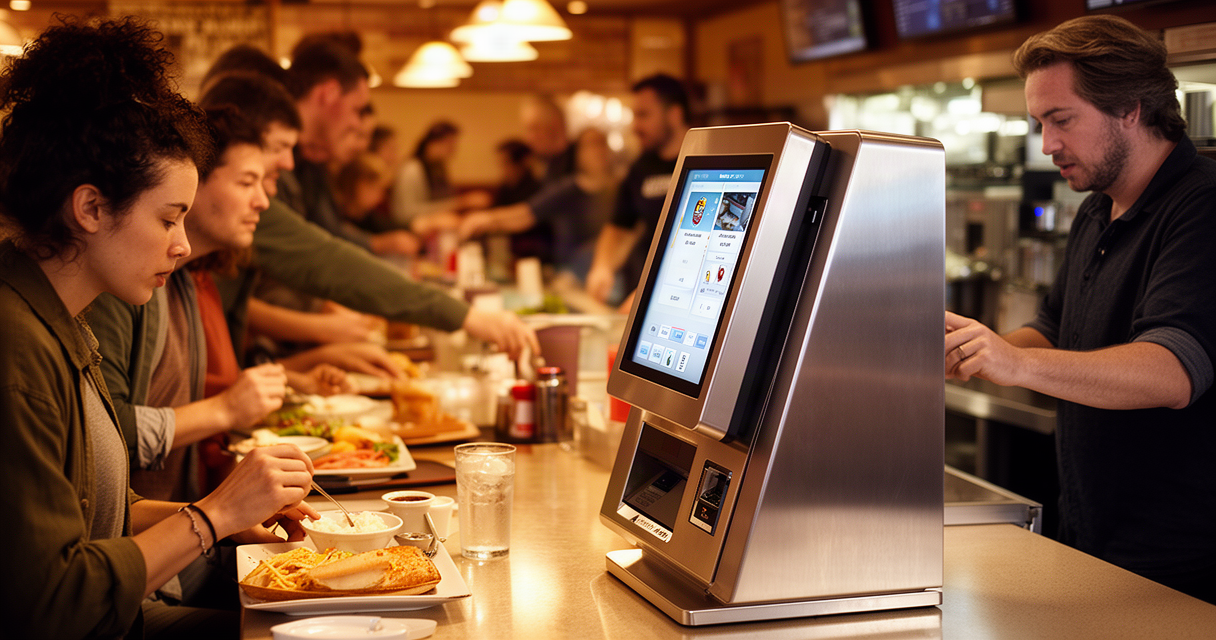
TablesReady targets a similar budget-conscious segment with a simpler feature set and has a following among counter-service and fast-casual spots rather than full-service dining rooms, where the waitlist behavior is closer to a queue number than a seated-table estimate.
Yelp Guest Manager is worth watching rather than adopting purely for waitlist prediction. Yelp announced a 2026 partnership with OpenAI around ChatGPT-based restaurant discovery and bookability — AI agents surfacing and booking restaurants directly through a chat interface, not AI predicting in-house wait times. A widely cited Morning Consult figure pegs consumer interest in AI-agent booking at roughly two-thirds of respondents, though that number is circulating secondhand across coverage of the partnership and is worth verifying against Morning Consult’s original release before citing it as fact. The relevant point for a small operator: this is where restaurant AI is actually advancing in 2026 — discovery and bookability — not wait-time math, which is still catching up.
The Real Monthly Cost
Sticker prices understate what these tools actually cost once SMS volume and add-ons enter the picture. Waitwhile bills SMS separately from the plan fee, so a busy Friday-heavy operation sending hundreds of texts a month should budget beyond the base $31 or $55 figure. NextMe’s paid tiers include set SMS allotments, but a restaurant that outgrows the free tier’s 100-message cap jumps straight to the $49.99 tier regardless of how far over the limit it actually runs.
Hostme’s pricing is the most straightforward of the three because the plans are flat and the SMS/table-management features are bundled — but flat also means paying for the floor-plan and events layer even in months a restaurant doesn’t use it.
For calibration on what “expensive” looks like in adjacent categories, an operator in r/restaurateur reported paying around $199/month for Tock, a reservation-and-waitlist platform aimed at a higher tier of full-service dining — a figure from around 2021 that should be treated as community-reported rather than verified against a current vendor source, but it’s a useful ceiling. None of the three tools ranked here approach that price point even at their top plan, which is itself a reasonable argument for a small independent to start with Waitwhile or NextMe before considering anything positioned as an enterprise-grade platform.
Does AI Wait-Time Prediction Actually Beat a Host’s Gut?
This is the question that matters most and the one vendors answer least honestly.
No independently verified benchmark compares any of these tools’ predicted wait times against an experienced host’s own estimate. That comparison doesn’t appear to exist in any published, third-party study as of this writing — every accuracy claim in this category currently traces back to the vendor itself.
For a high-volume operation with tight, POS-integrated table-turn tracking and a large enough sample of historical seatings, a predictive system has the raw material to outperform a rotating cast of hosts guessing off memory. That’s the environment tier-two AI is actually built for. A one-to-three-location independent without high transaction volume, without a tightly integrated POS feeding real-time table status, and often staffed by a host who’s been reading the room for two years — the software isn’t working with enough data to reliably beat that person’s gut. The claim that a small independent’s “AI” wait estimate is more accurate than its own head host should be treated skeptically until proven otherwise on that specific floor.
No-show reduction claims deserve the same scrutiny. No independently verified case study documenting a specific no-show percentage reduction was found for Waitwhile, NextMe, or Hostme; any vendor-stated percentage on a pricing or features page should be read as a marketing figure, not a verified outcome, until the underlying methodology is published.
The believable win is narrower and less dramatic than “AI predicts your wait time” or “AI cuts no-shows”: getting a text out fast enough, with an estimate close enough to reality, that fewer parties physically leave the queue before their table opens. That’s a walk-away reduction, not a no-show reduction — the party never committed to waiting in the first place, so there’s nothing to “show” or “no-show.” It’s also the outcome most directly tied to revenue, since a walked-away party spends nothing that night, anywhere in the restaurant.
Pairing the waitlist tool with a system that handles the phone side of the same problem closes a real gap — a caller asking “how long’s the wait tonight” is functionally the same question a walk-in asks at the door, and an AI phone answering service can answer it without pulling a host off the floor during the rush that’s causing the wait in the first place.
Our Take: Start With Waitwhile, Downgrade to NextMe if Budget Is Tight
For most small, walk-in-heavy independents without a dedicated host stand, Waitwhile is the stronger overall pick. The free tier is real enough to actually run a slower location on, the paid tiers are priced below most of the category, and the SMS-plus-live-queue combination delivers the one outcome that matters — fewer walk-aways — without requiring the operator to buy a floor-plan-and-events platform it doesn’t need.
NextMe earns the recommendation for operators who are budget-constrained first and feature-hungry second; its free tier is generous enough for true low-volume spots, and its paid tiers, while priced above Waitwhile’s, remain reasonable for what they deliver.
Hostme is the right call only when the restaurant genuinely needs full table management, a floor plan, and event booking in one system — and can absorb a bill starting around $109 a month with no free tier to test the waters first. Buying Hostme purely for waitlist prediction, when a restaurant doesn’t need the floor-plan and events layer, is paying enterprise pricing for a feature set two cheaper tools already cover.
The category’s marketing consistently oversells the “AI” in AI waitlist software. What actually moves revenue on a Friday night is a fast, roughly accurate text sent before a party gives up and walks next door, not a smarter prediction algorithm.
FAQ
Is AI waitlist software worth it for a single-location restaurant?
Yes, if the location does enough walk-in volume that a clipboard and shouted names create real chaos on busy nights. A free tier from Waitwhile or NextMe covers most single-location operators without any cost, so the “worth it” question is more about setup time than money.
Does AI wait-time prediction actually reduce no-shows?
No independently verified case study confirms a specific no-show reduction percentage for Waitwhile, NextMe, or Hostme. The more defensible claim is a reduction in walk-aways — parties leaving the queue before being seated — because they got a faster, more accurate text than a manual system would have sent.
Can these tools integrate with my POS system?
Integration depth varies by tool and changes over time, so current status should be verified directly with each vendor before buying. Hostme’s Toast integration specifically is listed by third-party sources but shows an open, unresolved request on Hostme’s own feedback board as of this writing — a clear case where the vendor’s own status should override secondary listicle claims.
What’s the real cost difference between Waitwhile, NextMe, and Hostme?
Waitwhile and NextMe both offer usable free tiers, with paid plans in the roughly $31–$100/month range depending on tier and SMS volume. Hostme has no free tier and starts around $109/month, reflecting its broader floor-plan and events feature set rather than a stronger core waitlist function.
Do I need a dedicated host stand to use AI waitlist software?
No. All three tools are commonly used by restaurants with no dedicated host — a manager, server, or owner runs the tablet or phone during a rush. The workflow is simpler without a host stand, not more complicated, since there’s less to configure around a fixed physical station.