Jolt vs FoodDocs vs Zip HACCP for small restaurants is a comparison most guides get wrong: they’re written for a 15-unit franchise group with a compliance director on staff. The features lists are aimed at multi-location shift accountability, the pricing pages hide the real number behind “contact sales,” and the buyer persona assumed throughout is nothing like the person actually running a single dining room.
That mismatch has real cost. A one-location operator evaluating this category is most likely to overpay for modules they’ll never touch — cross-location dashboards, franchise reporting, corporate-brand checklists — or to stay on paper for another two years because every tool on the market feels built for someone else’s business. Either mistake gets expensive on a bad inspection morning, when the missing log is the one thing standing between a pass and a written violation.
The short answer: Zip HACCP is the only one of these three actually priced and built for a single location. FoodDocs is worth evaluating for its AI-generated HACCP documentation, but its claims deserve independent verification rather than trust in its own marketing. Jolt is overkill below three locations or a franchise structure. And paper is a legitimate, defensible choice for a low-turnover kitchen with a clean inspection history — the real risk in that setup is staff backfilling entries under pressure, not the paper itself.
The full breakdown follows.
HACCP Software vs. Allergen Labeling: What This Article Is (and Isn’t) About
This comparison covers internal food-safety compliance: temperature logs, opening/closing checklists, corrective-action documentation, and the audit trail an inspector or a health department might ask to see. That is a distinct category from customer-facing allergen labeling — the menu-level disclosures, ingredient tagging, and allergen-matrix tools that protect diners with food allergies rather than the kitchen’s paper trail.
Several vendors in this space blur the line deliberately, bundling an allergen module into a HACCP suite to justify a higher tier. A restaurant evaluating labeling needs specifically should look at dedicated allergen management software rather than assuming a HACCP tool covers it. The two problems have different stakeholders, different legal exposure, and different buying criteria.
Do You Even Need Food Safety Software for One Location?
Paper and clipboard logs are generally acceptable to health inspectors in most jurisdictions. That is worth stating plainly, because a lot of category marketing implies the opposite — that digital logging is now a de facto requirement. It is not, in most places. Food-safety regulation is set at the state and often county or city level, and requirements vary enough that any operator considering this decision should confirm directly with their local health department rather than take a vendor’s word for it.
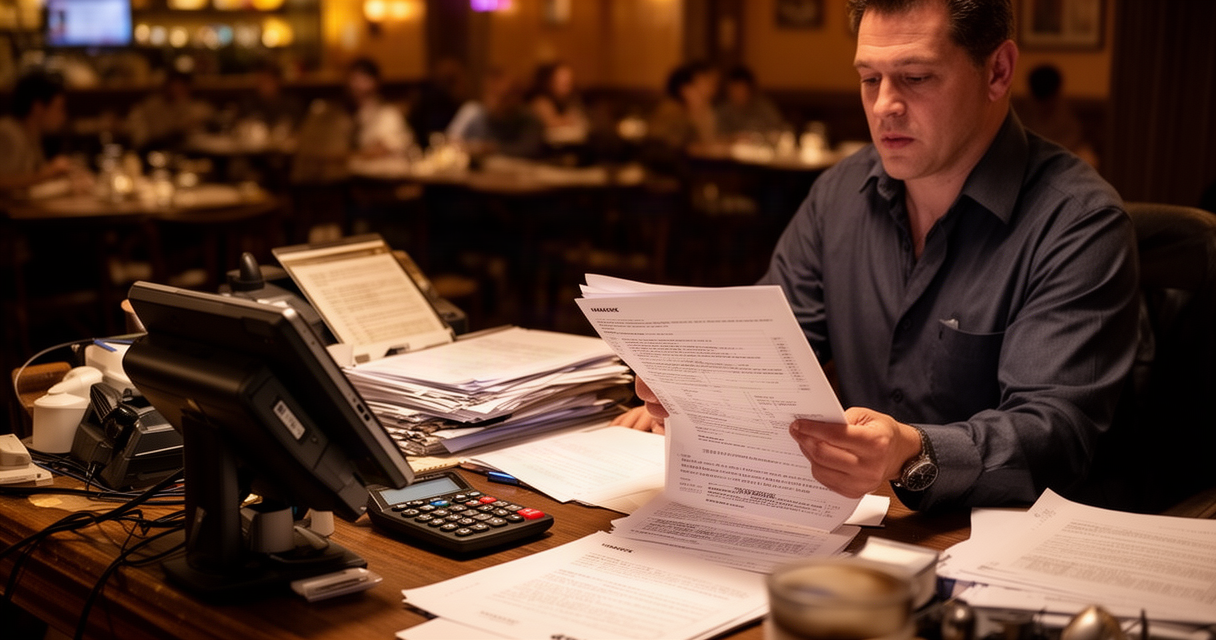
The actual failure mode with paper logs is not that inspectors reject them. It is that a line cook filling out a temperature sheet forty minutes late, from memory, during a Friday dinner rush, produces a log that looks complete and isn’t accurate. One operator raising the question on r/ideavalidation described exactly this pattern — staff backfilling paper entries after the fact rather than logging in real time, which defeats the purpose of the log without ever triggering an inspection failure. That is a discipline problem wearing a compliance costume.
For a single location, inspections typically happen two to four times a year, which keeps the day-to-day urgency low. The cost of not digitizing — a failed inspection, a fine, a temporary closure — is a real and illustrative risk worth planning around, not a stat this article is citing, because no reliable single-location figure for that cost exists in public data. It is a reason to take logging discipline seriously, whatever the medium.
Jolt vs FoodDocs vs Zip HACCP vs Paper — Comparison Table
Pricing below is reported and approximate as of this writing — every vendor changes tiers frequently, and current quotes should be confirmed directly before budgeting.
| Jolt | FoodDocs | Zip HACCP | Paper/Manual | |
|---|---|---|---|---|
| Reported price | approx. $89.99+/location/mo advertised; real single-location quotes often $200-300/mo with add-ons | Lite approx. $99/mo; Standard approx. $167-199/mo; Professional approx. $250-299/mo | approx. $59.99/location/mo | consumables only (paper, binders, printing) |
| Best-fit size | multi-unit, franchise, QSR chains | small-to-mid, any location count | single- and dual-location independents | single location, low turnover |
| Temp logging | yes, with sensor integrations | yes, manual and connected | yes, with Bluetooth probe option | manual, handwritten |
| Checklists | yes, extensive, role-based | yes | yes, mobile-first | yes, paper-based |
| HACCP plan generation | limited, add-on-dependent | yes, AI-generated in about an hour, claimed | basic templates | manual, self-built |
| Labeling | yes, add-on module | limited | no | no |
| Task management | yes, strong, shift-based | basic | basic | none |
| AI/automation | limited | central selling point | minimal | none |
| Hardware/sensors | yes, proprietary sensors sold separately | optional, third-party | optional Bluetooth probe | none |
| Ease of setup | moderate to high complexity, onboarding fee reported | fast, marketed at about an hour | fast, mobile-first | immediate |
| Single-location fit | poor — priced and built for scale | fair — check tier carefully | strong | strong if discipline is solid |
Jolt: Built for Multi-Unit Operations, Priced Like It
Jolt’s advertised entry price sits around $89.99 per location per month, but that number describes the base tier before the add-ons a real kitchen typically needs. Temperature-monitoring sensors, label printing, and expanded checklist modules are sold separately, and single-location operators who have gone through the sales process report all-in quotes closer to $200-300 per month, plus a reported setup fee in the $500-600 range. Current pricing should be confirmed with Jolt directly before assuming either figure.
The product itself is built around shift accountability at scale — who clocked in, who completed which checklist, which manager signed off on a corrective action — which is exactly the problem a QSR chain or franchise group needs solved and exactly the problem a single independent kitchen usually doesn’t have. One manager, one dining room, and a small crew don’t need cross-location dashboards.
Reliability and contract terms show up as recurring friction points in reviews. One Apple App Store review described being locked into an annual contract for the label-printing add-on with no clear path to cancel it once signed. Another described a service outage that prevented completing state inspection forms inside the app during an actual inspection — the exact moment a compliance tool is supposed to be dependable. Neither complaint is disqualifying on its own, but both point toward a platform whose complexity scales with contract commitment, not just feature usage.
FoodDocs: AI HACCP Plans, But Read the Marketing Carefully
FoodDocs leads with a specific, attention-grabbing claim: an AI-generated HACCP plan produced in about an hour, built from a short intake questionnaire about the kitchen’s operation. For an operator who has never written a formal HACCP plan and doesn’t want to hire a consultant, that pitch is genuinely appealing. Reported tiers run Lite at about $99 per month, Standard at about $167-199, and Professional at about $250-299 — figures that should be reconfirmed on FoodDocs’ current pricing page, since tiers shift.
One thing worth flagging directly: FoodDocs publishes its own “best food safety software” ranking on its own company blog, and names itself in that ranking. That is vendor content marketing, not independent comparison, and it’s a common pattern across this category — several competitors do the same thing. It doesn’t make the underlying product bad, but it means any “best of” claim sourced from a vendor’s own blog should be treated as marketing copy, not evidence, and verified against the actual product before signing.
Verification matters here because real usage reports don’t always match the pitch. A Google Play review described a marketed shelf-date and traceability logging feature that, in practice, wasn’t a usable feature at all — leaving cleaning checklists as the primary functional tool in daily use. Separately, a discussion on r/SaaS raised a broader and fair point about AI-generated compliance documents in general: an AI-drafted HACCP plan still needs review and sign-off from someone qualified to catch what the automation missed. The tool drafts. It does not replace the person responsible for the plan being correct.
Zip HACCP: The One Actually Priced for a Single Location
Zip HACCP’s reported price sits at about $59.99 per location per month — the lowest of the three, and worth confirming on Zip’s current pricing page before committing, as with every figure in this article. That price alone doesn’t make it the right pick, but the product reads as built for small independent operations rather than scaled down from an enterprise platform.
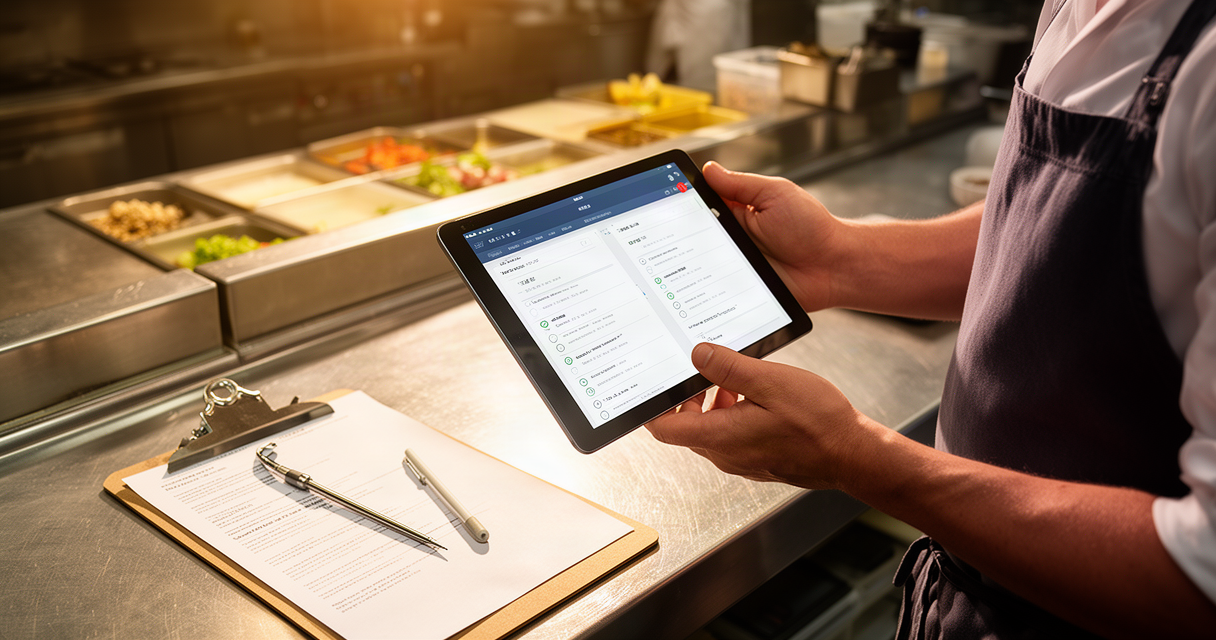
The feature set is mobile-first digital checklists, real-time sync across shifts, and an optional Bluetooth temperature-probe integration for kitchens that want automated temp capture without a full sensor network. It skips the cross-location reporting, franchise brand-standard tooling, and shift-accountability infrastructure that make Jolt expensive and complex. For a one- or two-location independent, that’s not a missing feature — it’s the absence of paying for something that was never going to get used.
Paper and Spreadsheets: When the $20 Clipboard Still Wins
Paper deserves to be evaluated as a real option in this comparison, not dismissed as the option for operators too cheap or too behind to modernize. Operators discussing kitchen logging on r/KitchenConfidential describe running effective food-safety documentation on nothing more than a shared Google Drive spreadsheet or an Excel template — no subscription, no onboarding fee, no vendor relationship to manage.
Paper’s real weakness isn’t legal exposure. It’s reliability under staff turnover and time pressure — the exact backfilling problem raised earlier by the operator on r/ideavalidation. A kitchen with low staff turnover, a manager who checks logs personally, and a clean inspection history has little reason to add a monthly subscription to solve a problem it doesn’t currently have.
Paper stops being enough once any of a few conditions show up: multiple locations that a single manager can’t personally oversee, high staff turnover that erodes logging discipline, a documented pattern of inspection issues, or simply reaching a size where no one is checking the logs closely enough to catch a gap before an inspector does.
Do You Need Standalone Software at All, or Does Your Back-Office Platform Already Cover This?
An operator already running scheduling, inventory, or accounting software should check whether that platform includes food-safety or HACCP checklist functionality before adding a fourth SaaS subscription to the stack. Some all-in-one restaurant management platforms bundle basic checklist and temp-logging tools as part of an operations module already being paid for.
An operator evaluating an all-in-one platform like Restaurant365 for back-office management should specifically confirm whether food-safety checklists are included before treating Jolt, FoodDocs, or Zip HACCP as a separate line item. Tool-stacking is one of the quieter ways a single-location budget gets eaten alive — three $60-per-month subscriptions solving problems one platform already handles.
Our Take: Which One (If Any) Small Restaurants Should Actually Pay For
A single location with low turnover and a clean inspection history has no urgent reason to change anything — staying on paper, or adding Zip HACCP purely as a cheap, low-friction digital backup, covers the actual risk without adding real cost or complexity.
A one- or two-location operator who wants to go fully digital on a limited budget should pick Zip HACCP. It’s the only one of the three priced and scoped for that exact situation rather than scaled down from something bigger.
An operator who specifically wants AI-assisted HACCP plan generation and is willing to independently verify the output before relying on it should look at FoodDocs — but should negotiate down from the Professional tier, since most single-location kitchens don’t need it and the vendor’s own “best of” content shouldn’t be the basis for that upsell.
An operator running three or more locations, or operating under a franchise structure that requires shift-level accountability, is the actual target buyer for Jolt — but should budget for the real all-in cost, including add-ons and the reported setup fee, not the advertised entry price.
The Bottom Line
Zip HACCP is the pick for most single-location independents who want to digitize. FoodDocs earns a look only if its AI-plan claims get checked against the actual product before paying for a higher tier. Jolt is the right tool for a different business than most readers of this comparison are running. And paper remains a legitimate answer for a kitchen with tight logging discipline and nothing broken to fix.
The practical next step: check whether an all-in-one platform already in use covers food-safety checklists, confirm the actual documentation requirements with the local health department rather than a vendor’s sales page, and be honest about whether the problem is a compliance gap or a discipline gap — because software fixes the first one and does very little for the second.
The best food-safety tool in any kitchen is the one whoever fills out the log every single shift will actually use.
FAQ
Do inspectors accept paper HACCP logs, or is digital now required?
In most jurisdictions, paper logs remain acceptable to health inspectors — there is no universal requirement to digitize. Requirements vary by state, county, and sometimes city, so any operator should confirm directly with their local health department rather than assume based on vendor marketing.
Do I even need food-safety software for one location?
Not necessarily. A single location with low staff turnover, consistent management oversight, and a clean inspection history can run effectively on paper or a spreadsheet. Software becomes more valuable as turnover rises or oversight thins out.
What’s the real cost of not digitizing food-safety logs?
There’s no single reliable dollar figure for this, and treating one as fact would be misleading. The realistic risk is illustrative: a failed inspection, a documented violation, or in a worst case a temporary closure — outcomes worth avoiding through logging discipline, whether that discipline runs on paper or software.
Is FoodDocs’ AI-generated HACCP plan actually reliable?
It can produce a usable first draft quickly, but a plan generated by AI still needs review and sign-off from someone qualified to evaluate it, per community discussion on r/SaaS. Treat it as a drafting tool, not a substitute for that accountability.
Why is Jolt so much more expensive than its advertised price?
The advertised entry price covers a base tier; real single-location costs climb once temperature sensors, label printing, and expanded checklist modules — sold as add-ons — get factored in, along with a reported setup fee. Operators should request a full itemized quote before comparing Jolt’s price to Zip HACCP’s or FoodDocs’.
What’s the actual difference between HACCP software and allergen labeling software?
HACCP software manages internal compliance documentation — temperature logs, checklists, corrective actions. Allergen labeling software manages customer-facing disclosures about ingredients and allergens on the menu. They solve different problems for different audiences, even though some vendors bundle both under one product name.
References
- Jolt — official pricing page (advertised base tier and add-on structure; confirm current pricing directly)
- FoodDocs — official pricing page (Lite/Standard/Professional tiers; confirm current pricing directly)
- FoodDocs — company blog, “best food safety software” category ranking (vendor content marketing, self-ranked)
- Zip HACCP — official pricing page (per-location pricing; confirm current pricing directly)
- Apple App Store — Jolt app reviews (label-printing add-on annual contract complaint; outage during state inspection complaint)
- Google Play — FoodDocs app reviews (shelf-date/traceability feature usability complaint)
- r/ideavalidation — discussion thread on paper log backfilling in restaurant kitchens
- r/KitchenConfidential — discussion thread on Google Drive/Excel-based food-safety logging
- r/SaaS — discussion thread on AI-generated compliance documentation and the need for human sign-off